If you are not happy with the results, please do another search

Unlockdown 1.0 – Telangana Guidelines

The government of Telangana vide its Order dated 31st May 2020 decided that in the areas outside the Containment Zones, the lockdown orders, which are currently in force, as per G.O. Ms. No. 68 dated 18th May 2020, shall stand extended till 7th June 2020 with the following modifications:

a) Restriction on movement of persons (other than for accessing emergency medical care) shall apply from 9 p.m. to 5 a.m.

b) No shops/establishments, except hospitals and pharmacies, will remain open after 8 p.m.

c) There shall be no restriction on inter-state movement of persons. No separate permission will be required for such movements.


In respect of Containment Zones, provisions of lockdown order, which are currently in force as per G.O. Ms. No. 68 dated 18th May 2020, shall stand extended till 30th June 2020.


The G.O. Ms. No. 68 dated 18th May 2020, inter alia, provided the following:

A. The following activities shall be permitted:

(i) Intra-state movement of buses and other passenger vehicles is permitted, except in GHMC area.

(ii) Restaurants will be permitted to operate for take away/home delivery only.

(iii) Barber shops, spas, and saloons are permitted to open with strict safety measures like masks, gloves, distancing, regular cleaning with disinfectant.

(iv) Taxis, cab aggregators and auto rickshaws shall be permitted to operate. However, taxis and cabs shall take a maximum of three passengers excluding the driver and auto-rickshaws shall take maximum two passengers in addition to the driver. They shall, however, maintain proper sanitation and both the passengers and the driver shall wear masks. Restriction on pillion riders on two wheelers is relaxed.

(v) All shops are permitted to be opened. However, in GHMC area, all shops will function on alternate days in such a way that no two adjacent shops shall remain open on the same day.

(vi) E-commerce shall be permitted for all commodities.

(vii) Marriage related gathering shall ensure social distancing, and the maximum number of guests allowed shall not be more than 50.

(viii) Funeral/last-rites related gathering shall ensure social distancing, and the maximum numbers allowed shall not be more than 20.

B. The following activities shall continue to be strictly prohibited:

(i) Domestic and international air travel of passengers.

(ii) Metro rail services.

(iii) Inter-state movement of buses and other passenger vehicles.

(iv) Passenger train operations except special trains for stranded persons.

(v) All schools, colleges, educational/coaching/training institutes, etc.

(vi) Hospitality services like hotels, lodges, etc. except those accommodating health, police, government functionaries and stranded persons etc.

(vii) Bars, pubs, cinema halls, theatres, shopping malls, gyms, swimming pools, sports complexes, amusement and zoo parks, museums, auditoriums, etc.

(viii) All gatherings such as for social, political, sports, entertainment, academic and cultural purposes etc.

(ix) All religious places and places of worship etc. for public, all religious congregations.

C. Night curfew shall continue to be in place, i.e. no movement of any persons shall be permitted for any purpose other than accessing emergency medical care during the period from 7 p.m. to 7 a.m.

D. Inter-state movement of all types of goods/cargo including empty trucks shall be permitted.

E. All industries and construction activities shall be permitted in all areas.

F. All private offices and government offices shall function without any restrictions. They shall, however, follow the SOP issued for running of offices.

G. All shops, establishments and offices shall follow regular sanitation measures, ensure use of masks by one and all, proper distancing and avoid crowding to ensure that there is no spread of the coronavirus.

H. Containment zones shall be identified as per norms and strict perimeter control shall be ensured so that there is no movement of people in and out of these areas except for medical emergencies and maintaining supply of essential goods and services.

I. Persons above 65 years of age, persons with co-morbidity, pregnant women and children below the age of 10 years, shall stay at home, except for essential and health purposes.


The order, further stated that all the restrictions prescribed in G.O.Ms.No.64, dated 7th May 2020 shall continue to be in force unless specifically modified by G.O. Ms. No. 68 dated 18th May 2020.
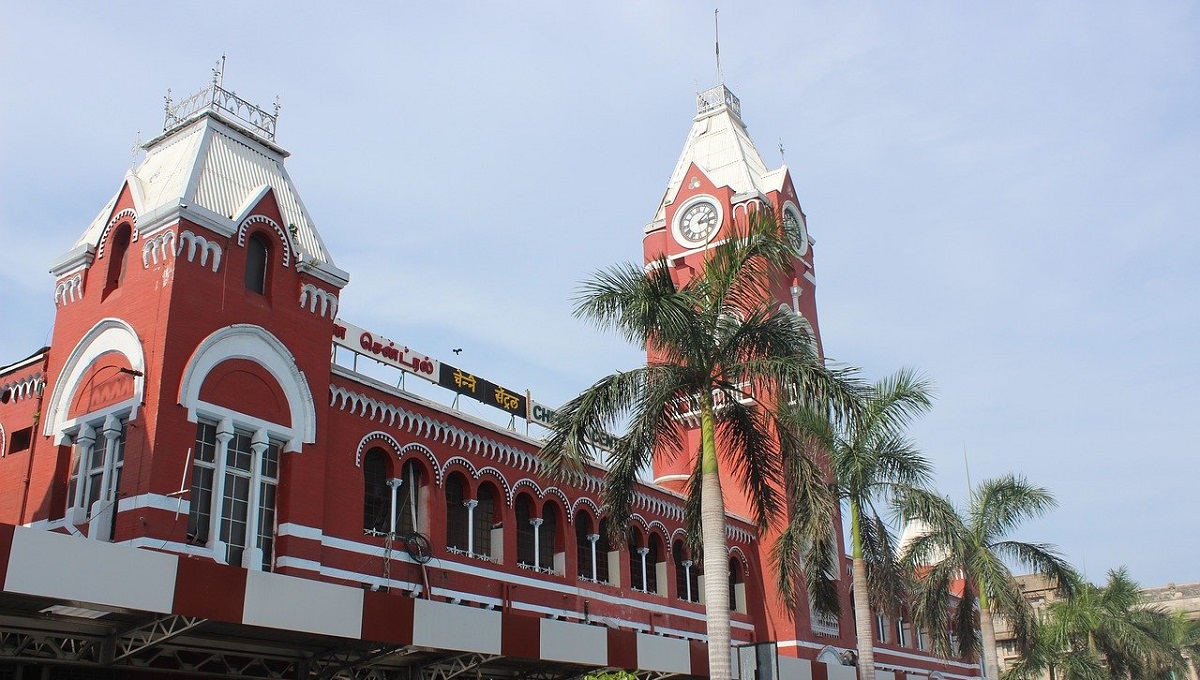
Unlockdown 1.0 – Karnataka Guidelines

Pursuant to the order issued by the Ministry of Home Affairs (“MHA”), Government of India bearing No. 40-3/2020-DM-I(A) dated 17 May 2020 on extension of lockdown till 31 May 2020 and guidelines on lockdown measures, the Karnataka State Government vide order No. RD 158 TNR 2020, dated 18 May 2020 issued guidelines on lockdown measures to contain the spread of COVID-19 in the state of Karnataka which was in force from 18 May 2020 to 31 May 2020. A brief overview of the said order issued by the Karnataka State Government can be accessed here.

Subsequently, the Ministry of Home Affairs, Government of India issued an order dated 30 May 2020 bearing No. 40-3/2020-DM-I(A) (“Order”) on the extension of lockdown in the containment zones upto 30 June 2020 and on re-opening of prohibited activities in a phased manner in areas outside containment zones. The guidelines on lockdown measures shall remain in force upto 30 June 2020.

Pursuant to the said Order and in exercise of the powers conferred under the Disaster Management Act, 2005, the Karnataka State Government has issued updated guidelines dated 30 May 2020 vide order no. RD 158 TNR 2020, on the lockdown measures which will come into effect immediately and be valid till 30 June 2020 (“Karnataka Order”). The Karnataka Order can be accessed here.

1. Phased re-opening of areas outside Containment Zones:

The Karnataka Order primarily permits all activities in areas outside Containment Zones. However, certain specific activities are permitted subject to the Standing Operating Procedures (“SOPs”) that are to be prescribed by the Ministry of Health and Family Welfare (“MoHFW”). These specific activities are proposed to be permitted in three phases:

(i) Phase I:

The Karnataka Order allows the following activities from 08 June 2020 onwards:


(a) Religious places/places of worship;


(b) Hotels, restaurants and hospitality services; and


(c) Shopping malls.

(ii) Phase II:

Schools, colleges, educational/ training/ coaching institutions etc. are proposed to be opened after consultations with parents and other stakeholders. Based on such discussions, a decision in this regard is proposed to be taken in the month of July 2020.

(iii) Phase III:

Dates for resuming the following activities is proposed to be decided based on evaluation of the extent of spread and containment of the situation:


(a) International air travel of passengers, except as permitted by MHA;


(b) Metro Rail;


(c) Cinema halls, gymnasiums, swimming pools, entertainment parks, theatres, bars and auditoriums, assembly halls etc.;


(d) Social, political, sports, entertainment, academic, cultural, religious functions and other large congregations.

2. National Directives for COVID-19 Management:

The National Directives for COVID-19 Management, as annexed to the Karnataka Order in its Annexure I shall continue to be followed throughout the State.


(a) Compulsory wearing of face cover in public places, workplaces and during transport. In the event of any non-compliance in this regard, a fine of INR 100 in rural areas and INR 200 in urban areas shall be imposed;


(b) Maintenance of minimum distance of 6 feet in public places;


(c) Shops to ensure physical distancing and prohibit entry of more than 5 persons at one time;


(d) Large public gatherings are prohibited.


(e) For marriage related gatherings, number of guests to not exceed 50.


(f) For funeral related gatherings, number of persons to not exceed 20.


(g) Spitting in public places is punishable with fine as prescribed by the local authorities;

(h) Consumption of liquor, paan, gutka, tobacco etc. in public places is prohibited.


(i) Workplace directives:


i. Work from home to be practiced to the extent possible;


ii. Staggering of work/ business hours to be followed in workplaces, shops, offices, markets, industrial and commercial establishments;


iii. Provision of thermal screening, sanitizer, hand wash to be made at all entry and exit points and common areas;


iv. Frequent sanitization of all points which come into human contact to be ensured;


v. Practicing of social distancing by workers is to be ensured by all persons

in charge of workplaces.

3. Night Curfew:

Movement of individuals between 9.00pm and 5.00am shall continue to be prohibited throughout the State, except for essential activities. In this regard, the local authorities have been directed to issue orders in the entire area of their jurisdiction and ensure strict compliance.

4. Lockdown in Containment Zones:

(a) The Karnataka Order directs the District Authorities to demarcate the Containment Zones, on due consideration of the guidelines issued by the MoHFW, Government of Karnataka;


(b) It also imposes continuation of the lockdown in such containment zones until 30 June 2020;


(c) Only essential activities are to be allowed in the containment zones;


(d) Strict perimeter control shall be imposed in such zones to ensure that there is no movement of people in and out of these zones, except for medical emergencies and maintenance of supply of essential goods and services. The Karnataka Order also stipulates intensive contact tracing, house-to-house surveillance, and other clinical interventions.


(e) District Authorities/ BBMP may also identify Buffer zones outside the Containment Zones, where new cases are likely to occur. Further, the Karnataka Order allows the District authorities to exercise their discretion to impose restrictions within such buffer zones.

5. Unrestricted Movement of Persons and goods:

(a) The Karnataka Order allows inter-State and intra-State movement of persons and goods without any restriction. No separate permission / approvals / e-permits will be required for any such movements.


(b) Based on its assessment of the situation on account of public health reasons, separate orders will be issued by the MoHFW, Government of Karnataka, regarding inter-state movement of persons to Karnataka.


(c) SOPs are required to be adhered to with respect to the movement of person by passenger train and Shramik special train, domestic passenger air travel, movement of Indian Nationals stranded outside the country and of specified persons to travel abroad, evacuation of foreign nationals, and sign-on & sign-off of Indian seafarers.

6. Protection of vulnerable persons:

Persons above 65 years of age, persons with co-morbidities, pregnant women and children below the age of 10 years are advised to stay at home, except for essential and health purposes.

7. Use of Aarogya Setu:

Employers should on best efforts basis, ensure that the Arogya Setu app is installed by all employees having compatible mobile phones. District authorities and BBMP may also advise individuals in this regard.

8. Strict implementation of the Order:


(a) The District Authorities/BBMP have been directed to not dilute the Order in any man;


(b) Further, all Deputy Commissioners/ Commissioners of BBMP have been directed to strictly enforce the measures mentioned above.

9. Penal Provision:

Any person violating these measures, shall be liable to be proceeded against as per the provisions of Section 51 to 60 of Disaster Management Act, 2005; besides legal action under Section 188 of Indian Penal Code and other applicable provisions.

Unlockdown 1.0: Tamil Nadu Guidelines

On 31 May 2020, the government of Tamil Nadu, following the Guidelines issued by the Ministry of Home Affairs (MHA) on 30 May 2020, has extended the lockdown in the State till 30 June 2020 vide G.O. Ms. No. 262 (Order) pursuant to the Disaster Management Act, 2005.

Based on recommendations by expert team of Doctors and Public Health specialists, the State-wide lockdown was being extended by the government from time to time. The previous extension was from 17 May 2020 till 31 May 2020.

The Order provides for further relaxations and restrictions in addition to the G.O. Ms. No. 217 dated 03 May 2020 and the G.O. Ms. No. 245 dated 18 May 2020.

1. Prohibited activities:

The following activities will continue to be prohibited:

  • All religious places/ places of worship;

  • Religious congregations;

  • Tourist travel to Nilgiris, Kodaikanal and Yercaud districts;

  • Hotels, restaurants and other hospitality services except those meant for housing health/ police/ Government officials/ healthcare workers/ stranded persons including tourists and for quarantine facilities;

  • Shopping malls;

  • Schools, colleges, educational/ training/ coaching institutions etc. Online/ distance learning shall continue to be permitted and shall be encouraged;

  • All international air travel of passengers except as permitted by MHA;

  • Metro rail and sub-urban rail services;

  • Cinema halls, gymnasiums, swimming pools, entertainment parks, theatres, bars, auditoriums, assembly halls and similar places. Sports complexes and stadia are permitted to be open without spectators;

  • All social, political, sports, entertainment, academic, cultural, religious functions, other large gatherings and congregations;

  • Inter-State public transport.

2. No activities are permitted in the Containment Zones under the Order.

3. Permitted activities:

(i) In areas falling under the jurisdiction of Greater Chennai Police (except Containment Zones):

  • IT/ ITEs are permitted to operate with company provided transport at 20% strength subject to a maximum of 40 persons;

  • All Private offices are allowed to function at 50% strength. However, work form home is to be encouraged as much as possible;

  • All showrooms and large format shops (including jewellery and textile shops) except in shopping malls are permitted to operate with 50% staff strength without air conditioning and limiting the number of customers to five at a time to ensure social distancing;

  • Restaurants shall be permitted to function with effect from 8 June 2020 with dine-in facilities with 50% of seating capacity maintaining social distancing. Air conditioning shall not be used;

  • Tea shops are permitted to function with effect from 8 June 2020 with 50% of seating capacity to maintain social distancing;

  • Tea shops and restaurants (parcel alone till 7 June 2020), vegetable shops and provision shops are permitted to function from 6 a.m. to 8 p.m.;

  • Liquor retail vending (TASMAC) shops to continue to remain closed until further orders; Rental vehicles and taxis including cab aggregation are permitted with not more than 3 passengers, excluding driver;

  • Autos and cycle rickshaws are permitted with 2 passengers, excluding driver;

  • Barber shops, saloons, spa and beauty parlours are permitted to function, without using air conditioning facility.

(ii) In all areas across the State except for areas under the jurisdiction of Greater Chennai Police and except in containment zones:

  • All industries are permitted to operate with 100% of employees;

  • IT/ ITEs are permitted to operate at 100% strength with at least 20% working from home;

  • All Private offices are allowed to function at 100% strength. However, work form home is to be encouraged as much as possible;

  • All showrooms and large format shops (including jewellery and textile shops) except in shopping malls are permitted to operate with 50% staff strength without air conditioning and limiting the number of customers to five at a time to ensure social distancing;

  • Restaurants shall be permitted to function with effect from 8 June 2020 with dine-in facilities with 50% of seating capacity maintaining social distancing. Air conditioning shall not be used;

  • Tea shops are permitted to function with effect from 8 June 2020 with 50% of seating capacity to maintain social distancing;

  • Tea shops and restaurants (parcel alone till 7 June 2020), vegetable shops and provision shops are permitted to function from 6 a.m. to 8 p.m.;

  • Other shops including liquor retail vending (TASMAC) shops are permitted to function from 10 a.m. to 8 p.m.;

  • Delivery of all goods, including non-essentials goods through e-commerce is permitted; Rental vehicles and taxis including cab aggregation are permitted with not more than 3 passengers, excluding driver;

  • Autos and cycle rickshaws are permitted with 2 passengers, excluding driver;

  • Public transport is permitted through Government and Private Buses subject to conditions as prescribed in Annexure I. The State of Tamil Nadu has been divided into 8 different zones for this purpose.

4. Movement of Persons:

  • All inter-district movements within respective zones and intra-district movement within Greater Chennai Police jurisdiction will be permitted without e-pass;

  • Inter-State movement and movement from one zone to another zone shall continue with current pass system;

  • Residents welfare associations/ building societies/ associations shall adopt necessary and appropriate safety measures to prevent the spread of COVID-19 which may include appropriate safeguards and regulations of the entry of outside persons including domestic workers and vendors to their buildings/ complexes;

  • All industrial and commercial establishments shall encourage their employees/ workers to work from home.

The Order also prescribes for the strict adherence of the National Directives for COVID-19 Management, as prescribed by the MHA.

Relaxation to Minimum Public Shareholding Requirements

Background

The Securities and Exchange Board of India (“SEBI”) has, after taking into consideration requests received from listed entities and industry bodies as well as considering the prevailing business and market conditions, decided to grant relaxation from the applicability of the circular dated October 10, 2017 (Circular No. CFD/CMD/CIR/P/2017/115) on the actions to be taken in case of non-compliance of the minimum public shareholding (“MPS”) requirements.

What is minimum public shareholding?

In terms of the Securities Contracts (Regulation) Rules, 1957, as amended (“SCRR”) read with Regulation 28 of the Securities and Exchange Board of India (Listing Obligations and Disclosure Requirements) Regulations, 2015, as amended (“Listing Regulations”), listed companies are required to maintain public shareholding of at least 25%. The obligation to reach and maintain this MPS threshold of 25% is attracted in three separate instances:

(a) Initial listing – In terms of Rule 19(2)(b) of the SCRR, the minimum offer and allotment to public in terms of an offer document by a company seeking listing, has to be within the range of at least 10% to at least 25%, subject to the post-issue market capitalisation of the listed company. If the post-issue market capitalisation of the listed company is more than Rs. 1,600 crores, the listed entity has the option, but not obligation, to offer and allot less than 25% of its capital to the public. The relaxation of issuing less than 25% of its capital to the public is available subject to the listed entity meeting the MPS threshold of 25% within a period of three years from the date of listing of its securities;

(b) Continuous listing – In terms of Rule 19A of the SCRR, every listed company, other than a public sector company, is required to maintain the MPS threshold of at least 25%. In case of a public sector company which has public shareholding below 25% on the commencement of the Securities Contracts (Regulation) (Second Amendment) Rules, 2018, a period of two years has been provided from the date of such commencement to restore the MPS to 25%. For companies covered under (a) above, the obligation to maintain MPS initiates from the date upon which the threshold of 25% MPS is first achieved.

(c) Violation of continuous listing – In the event that a listed entity, other than a public sector company, breaches the MPS threshold of 25%, it is required to bring back MPS threshold to 25% within a period of 12 months from the date of the breach of the threshold. For public sector companies, a two-year window is provided to restore the MPS threshold to 25%. Further, a three-year time period is provided to listed companies for restitution of the MPS threshold for breaches caused by issue of depository receipts or implementation of a resolution plan under Section 31 of the Insolvency and Bankruptcy Code, 2016.

Non-compliance of the MPS requirements

In terms of Regulation 97 of the Listing Regulations, a recognized stock exchange is charged with the duty to monitor compliance with the provisions of the Listing Regulations. Further, Regulation 98 of the Listing Regulations provides for penal actions that may be undertaken by stock exchanges in case of failure to comply with the provisions of the Listing Regulations, including the requirement to maintain MPS threshold. Towards this end, SEBI issued a circular dated October 10, 2017 (Circular No. CFD/CMD/CIR/P/2017/115), directing stock exchanges to review compliance with MPS requirements based on shareholding pattern/ other filings made with them by the listed entities from time to time and within fifteen days from date of observation of non-compliance, to issue notices to such entities intimating all actions taken/ being taken as per this circular and advise the entities to ensure compliance. On observing non-compliance, the recognised stock exchanges may take actions such as (i) levying of a fine against the listed entities for each day of non-compliance; (ii) freezing the entire shareholding of the promoters and promoter group in conjunction with depositories; (iii) freezing of all securities held in the dematerialized beneficial ownership accounts of the promoters and promoter group; and (iv) banning the promoters, promoter group and directors from taking up any new position as director of a listed entity. The recognised stock exchange may also consider compulsory delisting of the non-compliant listed entity.

Manner of achieving MPS

SEBI has by way of a circular dated November 30, 2015 (Circular No. CIR/CFD/CMD/14/2015) provided the mechanisms through which a listed entity may achieve compliance with MPS threshold. The approved mechanisms include (a) issue of fresh shares to public through prospectus (further public offering); (b) offer for sale of shares by promoters to public through prospectus (further public offering); (c) sale of shares by promoters through the stock exchange offer-for-sale mechanism; (d) offer for sale of shares by promoters by way of a qualified institutions placement; (e) rights issues with the promoters and/or members of the promoter group forgoing their entitlement; and (f) bonus issues with the promoters and/or members of the promoter group forgoing their entitlement. Mechanisms not specifically set out in this circular or elsewhere under SEBI regulations, can also be utilised, subject to approval of SEBI.

Relaxation provided by SEBI

Given the current volatility in the markets, SEBI, in its recent circular dated May 14, 2020 (Circular No. SEBI/HO/CFD/CMD1/CIR/P/2020/81) (the “Circular”) has provided a temporary relaxation to listed entities for whom the due date for complying with the minimum public shareholding fell within the time period of March 1, 2020 to August 31, 2020. SEBI has also advised recognized stock exchanges not to take any penal action as envisaged in the SEBI circular dated October 10, 2017 (Circular No. CFD/CMD/CIR/P/2017/115) against such entities in case of non-compliance during the said period. Penal actions, if any, initiated by stock exchanges from March 1, 2020 till May 14, 2020 for non-compliance of the MPS requirements by such listed entities may be withdrawn.

The Circular shall come into force immediately.

Please refer to the SEBI circular dated May 14, 2020 (Circular No. SEBI/HO/CFD/CMD1/CIR/P/2020/81) for more details.

Extension of lockdown till 31 May 2020 in Tamil Nadu

The government of Tamil Nadu had taken several first hand measures since January 2020 with a view to contain the spread of Covid-19. Between the period of January to March 2020, the government had sanctioned essential medicines worth Rs. 146 crores, 21 lakh protective gears, 1.45 crore face masks and 24 lakh N95 masks. The World Health Organization declared Covid-19 as a pandemic, following which the government has undertaken several measures under the Tamil Nadu Public Health Act, 1939 and the Epidemic Diseases Act, 1897 in order to curtail the spread of this disease.

In pursuance of the disaster management laws as applicable in Tamil Nadu, the Tamil Nadu government decided to extend the lock down from 17 May 2020 till 31 May 2020 (12.00 midnight), under the below mentioned guidelines/conditions (“Lock Down Period”). The circular can be accessed here.

Existing restrictions for the below mentioned operations shall stand unaltered until further notification:

  1. Functioning of schools, colleges, training institutes, research institutes.
  2. Public gatherings in places of worship and religious centers.
  3. Cinema halls, amusement parks, bars, gymnasiums, beach, tourist spots, parks, museums, swimming pools, stadiums, auditoriums.
  4. All types of religious, social, political, entertainment, educational, sports, cultural gathering and processions.
  5. Public travel via air, trains, buses including inter-state trains and bus travels shall remain prohibited. (Special flights, trains and public transport with exclusive permission from the centre/state government shall be permitted)
  6. Taxis, autos, cycle rickshaws.
  7. Metro trains and electric trains.
  8. Guest houses (excluding for employees’ accommodation), hotels, resorts.
  9. Funeral procession with not more than 20 persons.
  10. Weddings upon adherence to existing directions.

The restrictions already in place are as follows:

  1. The 12 districts of Chennai, Kanchipuram, Thiruvallur, Chengalpattu, Vizhupuram, Kadalur, Ranipet, Thirupatthur, Kallakuruchi, Thiruvannamalai, Ariyalur and Perambalur shall continue to function under the existing restrictions without any relaxations.
  2. Tourists shall not be allowed to visit the tourist areas of Nilgiris, Kodaikanal and Yercaud.
  3. The lockdown shall function without any relaxations at the Containment Zones.
  4. Apart from the Containment Zones in the Greater Chennai Police limits, all other activities as permitted under the existing list of permitted activities shall continue to be allowed.
  5. Except in the containment zones within the limits of the Greater Chennai Police and the containment zones within the other parts of the state of Tamil Nadu, all other activities as permitted under the existing list of permitted activities shall continue to be allowed.

New restrictions:

As a measure to ease restrictions step by step and in accordance with the advice of the High Level Committee the following relaxations have been introduced:

  1. The following relaxations shall be applicable in the districts of Coimbatore, Salem, Erode, Thiruppur, Namakkal, Karur, Thirunelveli, Thuthukudi, Thenkasi, Kanniyakumari, Theni, Madhurai, Sivaganga, Viruthunagar, Ramanathapuram, Dindugal, Pudhukottai, Trichy, Thiruvaroor, Tanjore, Nagapattinam, Dharmapuri, Krishnagiri, Vellore and Nilgiris:
  • Intra-state transportation shall be allowed without TN e-Pass.

  • In order to prevent the spread of the virus, the public is requested to use the transportation facilities for the purposes of the permitted activities and essential services alone.

  • TN e-pass shall continue to be availed for all inter-state movement.

  • Government and private buses that ply for the transportation of government and private employees shall carry upto 20 persons, vans shall carry upto 7 persons, SUVs and cars such as Innova shall carry upto 3 persons, small cars shall carry upto 2 persons (apart from the driver).

  • Taxis and rented vehicles that function for the purposes of essential services, businesses, healthcare etc. within these 25 districts shall do so without availing TN e-pass. Public should avoid venturing out of their houses unless absolutely required to do so.

  1. The National Rural Employment Guarantee Act – The existing limit of 50% workers shall be extended to 100%.
  2. Apart from the areas within the Greater Chennai Police limits, all the State Municipal Corporations, Municipalities and Town Panchayats shall have further relaxations in terms of the number of workers as follows : (i) Establishments employing less than 100 workers shall function with 100% capacity. (ii) Establishments employing more than 100 workers shall work with a maximum capacity of 50% of its workforce or with atleast 100 workers.
  3. Establishments that have been closed down as a result of the lockdown shall function for the purposes of essential general maintenance with a limited number of workers.
  4. Evaluation of the answer sheets pertaining to Class XII Public (Board) Examination is permitted.
  5. Training for national and international games under an individual trainer is permitted. Permission shall be obtained for the same from the chief of district administration and the Municipal Commissioner of Chennai.
  6. Among the 12 districts where transportation is not permitted, taxis, autos that are used for medical purposes shall be allowed.

General guidelines:

  1. All district collectors and Municipal Commissioners are advised to wear masks, follow social distancing, sanitize their hands at frequent intervals, use disinfectants, ensure safety of workers and ensure strict implementation of the Standing Operating Procedures.
  2. The State Government of Tamil Nadu is strictly monitoring the spread of the disease. The government shall come out with further relaxations as the spread decreases.
  3. Through the 10 special flights under the ‘Vande Bharath’ scheme of the Central Government, 1665 people belonging to Tamil Nadu have been brought back to the country and 264 people have returned through 2 ships.
  4. Steps are being taken to bring back persons struggling to return to Tamil Nadu from other states.
  5. 2 special Rajdhani trains have arrived at Tamil Nadu from New Delhi this week. Similarly, the government shall undertake measures to ensure that these trains ply for two days in a week with the permission of the Central Government.

Karnataka Lockdown Extension Order

Pursuant to the updated order issued by the Ministry of Home Affairs, Government of India dated May 17, 2020 bearing No. 40-3/2020-DM-I(A) (“Order”) with the new guidelines on the measures to be taken by Ministries / Department of Government of India / states and state authorities for containing the spread of COVID-19, the Karnataka state government has issued updated guidelines on the measures to be taken for containing the spread of COVID-19 which will come into effect immediately and be valid till May 31, 2020 (“Karnataka Order”). The Karnataka Order can be accessed here.

Below is a brief overview of the Karnataka Order, in addition to those set out by the Order:

1. Permitted Activities

  • In all zones areas except containment zones, taxis/autorickshaws (with a maximum of 2 (two) passengers excluding the driver), maxi cabs and aggregators will be permitted to ply with restrictions.

  • Barber shops, saloons and spas will be permitted to operate subject to the standard operating procedure prescribed by the Ministry of Health and Family Welfare.

  • Government and municipal parks will be open to the public between specified times subject to restrictions.

2. Curfew: Sundays will be full day lockdown, that is, on Sundays no movement will be permitted from 7AM to 7PM in addition to the 7PM to 7AM curfew, except for essential activities.

3. Demarcation of Zones: The Department of Health and Family Welfare, Government of Karnataka will demarcate taluks/wards into red, orange and green zones only for the purpose of monitoring and will not impose any additional restrictions to the activities permitted under these guidelines.

Economic Stimulus Package – May 2020

The Finance Minister, Government of India, announced a 5-part economic stimulus package from 13-17 May 2020, as part of the Atmanirbhar Bharat programme.

The incentives announced in each tranche of the stimulus package are as below:

Summary of incentives – Tranche 1

Summary of incentives – Tranche 2

Summary of incentives – Tranche 3

Summary of incentives – Tranche 4

Summary of incentives – Tranche 5

Please note that where statutory reforms have been announced, the relevant amendment bills/ordinances are awaited.

Lockdown 4.0 – MHA Guidelines

The National Disaster Management Authority (NDMA) issued Order Number 1-29/2020 -PP on 17 May 2020, by virtue of its power under Section 6(2)(i) of the Disaster Management Act, 2005 (Act) directing the National Executive Committee (NEC) to continue to implement lockdown measures in all parts of the country, to contain the spread of COVID-19.

Such lockdown measures to contain the spread of COVID-19 were first imposed by the NDMA on 24 March 2020, and has now been imposed for the fourth time, until 31 May 2020.

In furtherance of the NDMA orders, the NEC in exercise of its powers under Section 10(2)(l) of the Act, had issued corresponding orders on lockdown measures on 24 March 2020, 29 March 2020, 14 April 2020, 15 April 2020 and 01 May 2020 along with respective addendums (NEC Orders).

Pursuant to the NDMA order on 17 May 2020, the Ministry of Home Affairs (MHA) vide Order No. 40-3/2020-DM-I(A) dated 17 May 2020 (Order), has issued guidelines on the measures to be taken by Ministries/ Departments of Government of India, State/ UT Governments and State/ UT Authorities for containment of COVID-19 in India, up to 31 May 2020.

On and from 18 May 2020, all the previous orders issued by the NEC in exercise of its powers under Section 10(2)(l) of the Act, including the NEC Orders, shall cease to have effect, unless expressly excepted under this Order.

Demarcation of Zones:

  1. The delineation of Red, Green and Orange zones will be decided by the respective State/ UT Governments, after taking into due consideration the parameters issued by the Ministry of Health and Family Welfare (MoHFW).
  2. Further, within the Red and Orange zones, Containment zones and Buffer Zones will be demarcated by the District Authorities, after taking into consideration the guidelines issued by the MoHFW.
  3. In the Containment Zones: (i) only essential activities shall be allowed. (ii) there shall be no movement of people in or out of the zones except for medical emergencies and for maintaining supply of essential goods and services; (iii) there shall be intensive contact tracing, house-to-house surveillance and other clinical interventions, as required.
  4. In other zones, all other activities except those specifically prohibited hereunder, are permitted.

Prohibited activities throughout the country:

  1. All domestic and international air travel, except for medical and security purposes.
  2. Metro rail services.
  3. School, colleges, educational, training and coaching institutions. Online/ distance learning is permitted.
  4. Cinema halls, shopping malls, theatres, parks, gyms, swimming pools, bars, assembly halls and auditoriums.
  5. Sports complexes and stadia are permitted to be open, however, spectators will not be allowed.
  6. Social, political, sports, entertainment, academic, cultural, religious functions and gatherings.
  7. Religious places, places of worship and religious congregations.
  8. Hotels, restaurants and other hospitality services, except, those meant for housing health, police, government officials, healthcare workers, stranded persons, tourists, quarantine facilities and running of canteens at bus depots, railway stations and airports.
  9. Restaurants shall be permitted to operate kitchens for home delivery of food items.

Movement of persons, except in Containment zones:

  1. Inter-state movement of passenger vehicles and buses with mutual consent of the States/UTs involved.
  2. Intra-state movement of passenger vehicles and buses as decided by the States/UTs.

Curfew:

  1. Irrespective of the zones, the Order prohibits all movement of individuals between 7.00 pm to 7.00 am, except for essential activities.
  2. The local authorities shall invoke appropriate provisions of law and issue such orders as it deems fit to ensure strict compliance of the curfew.
  3. Persons above 65 years of age, persons with co-morbidities, pregnant women and children below 10 years of age have been directed to stay at home, except for essential and health purposes.

Movement of certain persons and goods that are permitted:

  1. Inter-State and Intra-State movement of medical professionals, nurses, para-medical staff, sanitisation personnel and ambulances are permitted without any restrictions.
  2. Inter-State movement of all types of goods/ cargo, including empty trucks.
  3. Movement of any type of goods/ cargo for cross land-border trade under Treaties with neighbouring countries.

Standard Operating Procedures:

The Order directs strict adherence to the following Standard Operating Procedures for movement of persons:

  1. SOP for transit arrangements for foreign nationals in India issued vide Order dated April 02, 2020.
  2. SOP on movement of stranded labour within States/ UTs, issued vide Order dated April 19, 2020.
  3. SOP on sign-on and sign-off of Indian seafarers, issued vide Order dated April 21, 2020.
  4. SOP on movement of stranded migrant workers, pilgrims, tourists, students and other persons, issued vide Order dated April 29, 2020 and Order dated May 01, 2020.
  5. SOP on movement of Indian Nationals stranded outside the country and of specified persons to travel abroad, issued vide Order dated May 5, 2020.
  6. SOP on movement of person by train, issued vide Order dated May 11, 2020.

The Order further allows the States/ UTs, to prohibit certain other activities/ impose restriction, in the various zones as deemed necessary, based on their assessment of the situation.

Extending the lockdown till 31 May 2020, the Government of Tamil Nadu and Maharashtra, the states with leading count of active cases, have issued fresh guidelines for restrictions and relaxations of activities in the states.
Gujarat, the state with second highest number of cases, is yet to issue guidelines in this regard.

Use of Aarogya Setu Application (App):

To provide timely medical attention and to ensure safety in offices and workplaces, the Order directs employers to ensure that the App is installed by all employees, on a best effort basis.

Key relaxations provided by SEBI from the disclosure obligations under SEBI (Listing Obligations and Disclosure Requirements) Regulations, 2015

In view of the COVID 19 pandemic, the Securities and Exchange Board of India (“SEBI”) has provided certain relaxations to listed entities, from compliance with certain provisions of the SEBI (Listing Obligations and Disclosure Requirements) Regulations, 2015 (“SEBI LODR Regulations”) vide its circulars, most recent of which is the circular dated May 12, 2020 (Circular No. SEBI/HO/CFD/CMD1/CIR/P/2020/79), which provides for (i) additional relaxations in line with clarifications released by the Ministry of Corporate Affairs (“MCA”) dated April 8, 2020 and April 13, 2020; and (ii) further extension to certain relaxations already provided by SEBI vide its circulars dated March 19, 2020 (Circular No. SEBI/HO/CFD/CMD1/CIR/P/2020/38), March 26, 2020 (Circular No. SEBI/HO/CFD/CMD1/CIR/P/2020/48), April 17, 2020 (Circular No. SEBI/HO/CFD/CMD1/CIR/P/2020/63) and April 23, 2020 (Circular No. SEBI/HO/CFD/CMD1/CIR/P/2020/71.

Set out below are the key relaxations to the SEBI LODR Regulations provided:

1. Extension of timelines for submission of certificates

In terms of the SEBI LODR Regulations, listed entities are required to file certain compliance certificates with the stock exchanges, indicating compliance with regulatory requirements. These include

(a) Certificate on maintenance of share transfer facility as per Regulation 7 (3) which is to be filed within one month of the end of each half of the financial year.

Pursuant to the SEBI circular dated March 19, 2020 (Circular No. SEBI/HO/CFD/CMD1/CIR/P/2020/38), the due date for the submission of the compliance certificate for the half year ended March 31, 2020 has been extended from April 30, 2020 to May 31, 2020.

(b) Secretarial compliance report for listed entities and their material unlisted subsidiaries in terms of Regulation 24A, which is to be annexed to the annual report.

This requirement has been relaxed vide the SEBI circular dated March 19, 2020 (Circular No. SEBI/HO/CFD/CMD1/CIR/P/2020/38) from May 30, 2020 to June 30, 2020 for the financial year ended March 31, 2020.

(c) Certificate from practicing company secretary on share certificates as per Regulation 40(9) to be submitted within one month of the end of each half of the financial year, certifying that all certificates have been issued within thirty days of the date of lodgement for transfer, sub-division, consolidation, renewal, exchange or endorsement of calls/allotment monies and submit the same with the stock exchange.

SEBI vide its circular dated March 26, 2020 (Circular No. SEBI/HO/CFD/CMD1/CIR/P/2020/48), has extended the due date for submission of the aforementioned certificate, for the half year ended March 31, 2020, from April 30, 2020 to May 31, 2020.

2. Financial results

As per Regulation 33(3)(c) of the SEBI LODR Regulations, a listed entity is required to submit with the stock exchange, its standalone and consolidated (if applicable) quarterly financial results within 45 days of the end of the particular quarter. This requirement has been relaxed for the quarter ended March 31, 2020 pursuant to SEBI circular dated March 19, 2020 (Circular No. SEBI/HO/CFD/CMD1/CIR/P/2020/38). The due date for submission of the aforementioned financial results is revised from May 15, 2020 to June 30, 2020.

Further, as per Regulation 33(3)(d) of the SEBI LODR Regulations, a listed entity is required to submit with the stock exchange, its standalone and consolidated (if applicable) annual audited financial results within sixty days of the end of the financial year. This requirement has been relaxed for the quarter ended March 31, 2020 pursuant to SEBI circular dated March 19, 2020 (Circular No. SEBI/HO/CFD/CMD1/CIR/P/2020/38). The due date for submission of the aforementioned financial results is revised from May 30, 2020 to June 30, 2020.

In addition to the above, by way of SEBI circular dated May 12, 2020 (Circular No. SEBI/HO/CFD/CMD1/CIR/P/2020/79), SEBI took note of the representation from listed entities that are banks and insurance companies with relation to the difficulties faced by them in the preparation of consolidated financial results under regulation 33(3)(b) in view of different accounting standards being followed by companies belonging to same group and the difficulties in restating those financials as per Indian Accounting Standards (“Ind AS”) due to the prevailing circumstances in view of COVID 19 pandemic. The Reserve Bank of India through its notification dated March 22, 2019, has deferred the implementation of Ind AS until further notice to provide relief to scheduled commercial banks.

In light of the above, SEBI in the circular dated May 12, 2020 (Circular No. SEBI/HO/CFD/CMD1/CIR/P/2020/79) has clarified that listed entities which are banking and / or insurance companies or having subsidiaries which are banking and / or insurance companies may submit consolidated financial results under regulation 33(3)(b) for the quarter ending June 30, 2020 on a voluntary basis. However, they shall continue to submit the standalone financial results as required under regulation 33(3)(a) of the LODR. If such listed entities choose to publish only standalone financial results and not consolidated financial results, they shall give reasons for the same.

3. Provisions relating to frequency of meetings

As the lockdown has imposed restrictions on physical gatherings and companies have been facing difficulties in conducting meetings completely through electronic audio-visual means, SEBI has provided certain relaxations pertaining to the frequency of meetings to be held by listed entities. It may be noted that certain of these provisions will also require a corresponding relaxation from the MCA, which one can hope will be forthcoming shortly.

(a) As per Regulation 17(2), the board of directors of a listed entity is required to meet at least four times a year, with a maximum time gap of one hundred and twenty days between any two meetings and as per the Regulation 18(2)(a), the audit committee of a listed entity is also required to meet at least four times a year, with a maximum time gap of one hundred and twenty days between any two meetings. SEBI vide its circular dated March 19, 2020 (Circular No. SEBI/HO/CFD/CMD1/CIR/P/2020/38) has exempted listed entities from observing the maximum gap between the meetings held or proposed to be held between December 1, 2019 and June 30, 2020. However, it has been clarified that there is no relaxation provided to the board of directors / audit committee from ensuring that they meet four times in a year.

(b) SEBI has vide its circular dated March 26, 2020 (Circular No. SEBI/HO/CFD/CMD1/CIR/P/2020/48), extended the time limit provided to listed entities to have one meeting of the nomination and remuneration committee, stakeholders relationship committee and risk management committee as required under Regulation 19(3A), Regulation 20(3A) and Regulation 21(3A), respectively, of the SEBI LODR Regulations. A listed entity is now required to comply with this requirement by June 30, 2020 instead of March 31, 2020.

(c) As per Regulation 44(5) of the SEBI LODR Regulations, the top 100 listed entities by market capitalization, determined as on March 31st of every financial year, shall hold their annual general meetings within a period of five months from the date of closing of the financial year. SEBI vide its circular dated March 26, 2020 (Circular No. SEBI/HO/CFD/CMD1/CIR/P/2020/48), has extended the time limit for conducting the annual general meeting from August 31, 2020 to September 30, 2020. Further, SEBI has in its circular dated April 23, 2020 (Circular No. SEBI/HO/CFD/CMD1/CIR/P/2020/71 clarified that the extended time limit of up to September 30, 2020 shall also be applicable to the top 100 listed entities by market capitalization, whose financial year ended on December 31, 2020.

4. Provisions relating to publication and dispatch of forms and advertisements

In view of the impact of the current lockdown on postal services and physical newspapers, SEBI has also dispensed with or relaxed requirements relating to postal dispatch of forms or publication in physical newspapers, including:

(a) SEBI vide its circular dated May 12, 2020 (Circular No. SEBI/HO/CFD/CMD1/CIR/P/2020/79), has temporarily dispended the requirement of sending proxy forms for general meeting to holders of securities as per Regulation 44(4), in case such meetings are held through electric mode. This relaxation is available for listed entities who conduct their AGMs through electronic mode during the calendar year 2020 (i.e. till December 31, 2020).

(b) Regulation 36 (1)(b) and (c) of SEBI LODR Regulation prescribes that a listed entity shall send a hard copy of the statement containing salient features of all the documents, as prescribed in Section 136 of the Companies Act, 2013 to the shareholders who have not registered their email addresses and hard copies of full annual reports to those shareholders, who request for the same, respectively. Regulation 58 (1)(b) &(c) of the SEBI LODR Regulations extend similar requirements to entities which have listed their NCDs and NCRPS. SEBI vide its circular dated May 12, 2020 (Circular No. SEBI/HO/CFD/CMD1/CIR/P/2020/79), has dispensed the aforementioned requirements for listed entities who conduct their annual general meetings during the calendar year 2020 (i.e. till December 31, 2020).

(c) SEBI vide its circular dated March 26, 2020 (Circular No. SEBI/HO/CFD/CMD1/CIR/P/2020/48) read with its circular dated May 12, 2020 (Circular No. SEBI/HO/CFD/CMD1/CIR/P/2020/79) has exempted publication of advertisements in newspapers, as required under Regulation 47 of SEBI LODR Regulations, for all events scheduled till June 30, 2020, since some newspapers had stopped their print versions due to the COVID 19 pandemic.

5. Timelines for provision of intimation to stock exchanges

In view of the difficulties caused by the pandemic to normal operations of companies, SEBI has provided temporary relaxations regarding certain intimations to be provided to stock exchanges:

(a) As per Regulation 29 (2) of the SEBI LODR Regulations, stock exchanges need to be provided prior intimation about meetings of the board (excluding the date of the intimation and date of the meeting) as follows: (i) at least five days before the meeting if financial results are to be considered; and (ii) two working days in other cases.

SEBI vide its circular dated April 17, 2020 (Circular No. SEBI/HO/CFD/CMD1/CIR/P/2020/63) has decided that the above requirement under Regulation 29 (2) of SEBI LODR Regulations of prior intimation of five days / two working days shall be reduced to two days, for board meetings held till July 31, 2020.

(b) As per Regulation 39 (3) of the SEBI LODR Regulation, requires listed entities to submit information regarding loss of share certificates and issue of the duplicate certificates, to the stock exchange within two days of the listed entity receiving information.

SEBI vide its circular dated April 17, 2020 (Circular No. SEBI/HO/CFD/CMD1/CIR/P/2020/63) has decided that any delay beyond the stipulated time will not attract penal provisions laid down vide SEBI circular no. SEBI/HO/CFD/CMD/CIR/P/2018/77 dated May 3, 2018. This relaxation is for intimations to be made between March 1, 2020 to May 31, 2020.

6. Use of digital signature and electronic payment methods

(a) SEBI vide its circular dated April 17, 2020 (Circular No. SEBI/HO/CFD/CMD1/CIR/P/2020/63) has clarified that authentication / certification of any filing / submission made to stock exchanges under the SEBI LODR Regulations may be done using digital signature certifications until June 30, 2020.

(b) As per Regulation 12 of the SEBI LODR Regulations, issuance of ‘payable at par’ warrants or cheques in case it is not possible to use electronic modes of payment. Further, in case the amount payable as dividend exceeds Rs.1500, the ‘payable-at-par’ warrants or cheques shall be sent by speed post.

SEBI by way of the circular dated May 12, 2020 (Circular No. SEBI/HO/CFD/CMD1/CIR/P/2020/79) has clarified that the requirements of this regulation will apply upon normalization of postal services and in cases where email addresses of shareholders are available, listed entities shall endeavor to obtain their bank account details and use the electronic modes of payment specified in Schedule I of the SEBI LODR Regulation.

7. Deferral of effective date of operation of the SEBI circular on standard operating procedure

SEBI vide circular no. SEBI/HO/CFD/CMD/CIR/P/2020/12 dated January 22, 2020 issued the Standard Operating Procedure (“SoP”) on imposition of fines and other enforcement actions for non-compliances with provisions of the SEBI LODR Regulations, the effective date of operation of which is for compliance periods ending on or after March 31, 2020. Pursuant to the SEBI circular dated March 26, 2020 (Circular No. SEBI/HO/CFD/CMD1/CIR/P/2020/48), the said circular dated January 22, 2020 shall now come into force with effect from compliance periods ending on or after June 30, 2020. It may be noted that the SoP circular dated May 3, 2018 would be applicable till such date.

SEBI notifies eight entities to carry out e-KYC Aadhar authentication

In view of the COVID-19 pandemic, the Government of India, Department of Revenue had vide Gazette Notification No. G.S.R. 261(E) dated April 22, 2020 (“Notification”) permitted, interalia eight reporting entities to carry out electronic know-your-customer (“e-KYC”) Aadhar authentication by exercising its powers under the proviso to Section 11A of the Prevention of Money-Laundering Act, 2002 (“PMLA”).

Section 11A of PMLA lays down the documents using which a reporting entity must verify the identity of its clients and the beneficial owner. E-KYC using Aadhar authentication is only permitted to banking companies. However, if the Central Government is satisfied that a reporting entity other than a banking company, complies with the standards of privacy and security under the Aadhaar (Targeted Delivery of Financial and Other Subsidies, Benefits and Services) Act, 2016 then it may, post consultation with Unique Identification Authority of India (“UIDAI”) and the appropriate regulator, permit such entity to perform e-KYC using Aadhar authentication.

Accordingly, in furtherance of the Notification, the Securities and Exchange Board of India (“SEBI”), vide its circular dated May 12, 2020 (circular no. SEBI/HO/MIRSD/DOP/CIR/P/20 has allowed the following eight entities to undertake e-KYC Aadhar authentication of their clients:

  1. BSE Limited
  2. National Securities Depository Limited
  3. Central Depository Services (India) Limited
  4. CDSL Ventures Limited
  5. NSDL Database Management Limited
  6. NSE Data and Analytics Limited
  7. CAMS Investor Services Private Limited
  8. Computer Age Management Services Private Limited

The Central Government had also notified Link Intime India Private Limited for carrying out the authentication of the Aadhaar number of clients using e-KYC authentication facility. However, SEBI is yet to recommend them.

The eight notified entities have to register themselves with UIDAI as KYC user agency post which they shall allow SEBI registered intermediaries / mutual fund distributors to undertake Aadhaar authentication in respect of their clients for the purpose of the KYC. The SEBI registered intermediaries / mutual fund distributors who want to avail the facility of Aadhar authentication will have to enter into an agreement with a KYC user agency as well as get themselves registered with UIDAI as sub KYC user agency. The intermediaries registered as KYC user agencies or as sub KYC user agencies are required to follow the processes set out in the SEBI circular dated November 5, 2019, including obtaining permission from UIDAI for sharing e-KYC data, maintenance of auditable logs of transactions were e-KYC data is shared and mechanisms for monitoring irregular transactions. The process and use of technology for online KYC verification has also been clarified by SEBI by way of circular dated April 24, 2020.

This is a welcome move by SEBI given the lockdown prevailing in the country, as this will allow investors to comply with the applicable KYC requirements using Aadhar authentication and they will not have to physically visit the intermediaries. Moreover, it will lead to ease of investing, customer convenience, increased efficiency and reduced timelines for onboarding of clients. Using the e-KYC Aadhar authentication, one can now complete the KYC requirement of their demat account, brokerage account, trading account, make investments in mutual funds and other securities including applying to new systematic investment plan, systematic transfer plan and, dividend transfer plan, subscribe to overseas direct investments. Resident Indian foreign portfolio investors may also utilise the e-KYC Aadhaar authentication to comply with their KYC requirements. Further, one may now undertake e-KYC using Aadhar authentication with their SEBI registered portfolio managers, asset managers and wealth managers and other SEBI registered intermediaries and mutual fund distributors.

It is to be noted that e-KYC using Aadhar authentication is only optional and investors may continue to use the other officially valid documents as notified by the Central Government to be KYC compliant. Additionally, none of the reporting entities can store a client’s core biometric information or the Aadhar number.

Please refer to the SEBI circular dated May 12, 2020 (circular no. SEBI/HO/MIRSD/DOP/CIR/P/20) for more details.