If you are not happy with the results, please do another search

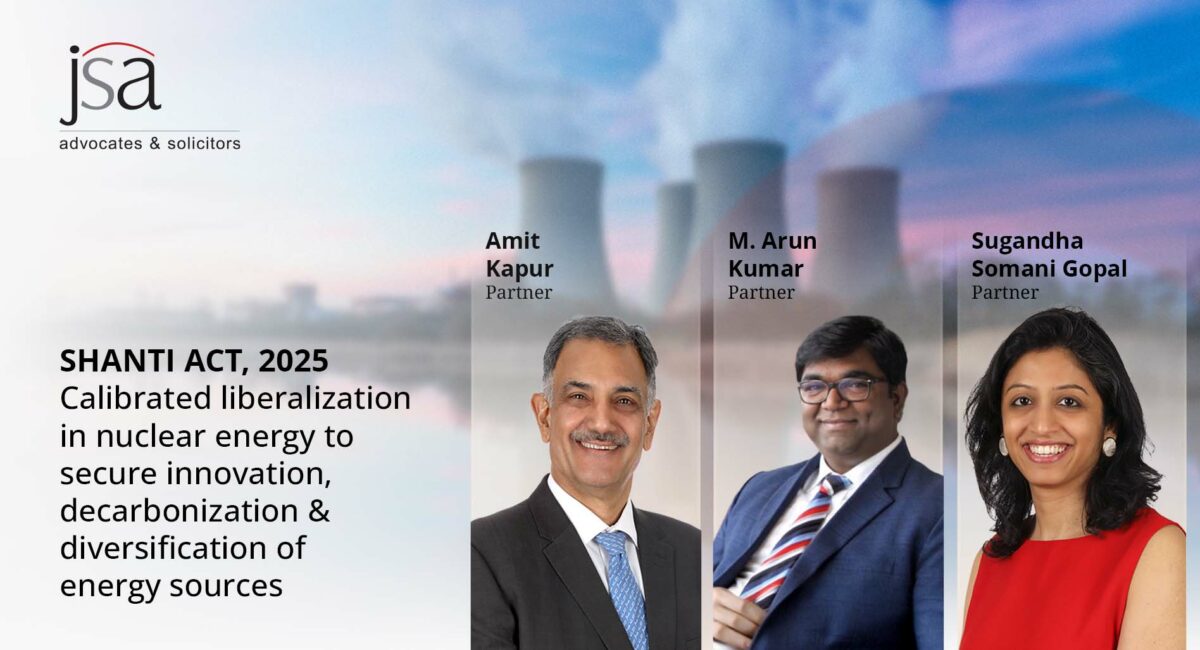
SHANTI ACT, 2025 | CALIBRATED LIBERALIZATION IN NUCLEAR ENERGY TO SECURE INNOVATION, DECARBONIZATION & DIVERSIFICATION OF ENERGY SOURCES

Intorduction

The newly enacted Sustainable Harnessing and Advancement of Nuclear Energy for Transforming India Act, 2025 (“SHANTI Act” or “Act”) has repealed and replaced the Atomic Energy Act, 1962 and the Civil Liability for Nuclear Damage Act, 2010 (“Existing Laws”), and has introduced a consolidated legal framework governing the promotion, development and regulation of nuclear energy. The Act seeks to remove barriers which have held back growth in India’s nuclear power generation. The Act seeks to attract domestic and foreign investment; promote R&D and innovation with a proportionate allocation of risk to global suppliers of nuclear equipment and fuel; within an institutional framework which safeguards Indian citizens, secures safety systems, and provides effective enforcement through the specialized mechanism.

The Act removes ambiguities that existed in the past laws regarding potential multifarious jurisdiction over claims and liability regime, now according statutory recognition to Atomic Energy Regulatory Board (“Board”), with nuclear damage claims adjudication vested with the Claims Commissioner and the Nuclear Damages Claims Commission, whose appeals shall lie before the Appellate Tribunal for Electricity. It excludes jurisdiction of civil courts over such matters and gives an overriding effect to the Act over all other laws and instruments.

Interestingly, the ambit of SHANTI Act extends beyond power generation to include the application of nuclear technology in healthcare, food, water and agriculture, with the objective of providing a clearer and more predictable regulatory environment. The Act permits foreign direct investment of up to 49% (Forty Nine Percent) in specified nuclear activities under the automatic route, thereby unshackling the public sector monopoly over this domain.

To achieve India’s target of 100 gigawatts of nuclear power capacity by 2047, the SHANTI Act allows eligible private companies and incorporated joint ventures to apply for licences to construct, own, operate and decommission nuclear power plants and reactors. At the same time, it preserves sovereign control over strategic and safety-sensitive activities, including uranium enrichment, spent fuel management, heavy water production, radioactive substances and radiation-generating equipment.

The key differences between the Existing Laws and the SHANTI Act are outlined below.


KEY DIFFERENCES AT A GLANCE

Entry into the Nuclear Sector

Under the Existing Laws, nuclear power generation was effectively restricted to the Union Government and government-controlled entities.

In contrast, Section 3 of the SHANTI Act introduces a comprehensive licensing regime for nuclear facilities and activities. It expressly permits a wide category of persons including Government departments and institutions, government companies, any other company, a joint venture among any of the aforesaid, and any other person specifically permitted by the Union Government by notification, to apply for licenses to build, own, operate or decommission nuclear power plants or reactors and to undertake related activities such as the fabrication of nuclear fuel (comprising conversion, refining and limited enrichment of uranium-235 upto threshold value notified by the Union Government), transportation and storage of nuclear fuel or spent fuel, and the import and export of nuclear fuel or spent fuel, prescribed equipment, and nuclear-related technology or software. Where licensed activities involve potential radiation exposure, a separate safety authorisation is also required.

Companies outside India not allowed

Private companies incorporated outside India are not permitted to operate under the SHANTI Act. Section 2(9) of the SHANTI Act defines “company” by reference to Section 2(20) of the Companies Act, 2013, and expressly excludes companies incorporated outside India. It would appear that foreign investors will have to route their investments through a company incorporated under Indian laws.

Sovereign control over critical nuclear materials

Section 3, most importantly, draws a clear line around strategic nuclear functions, reserving certain activities exclusively for the Union Government or its wholly owned entities. These include uranium enrichment or isotopic separation, spent fuel management including reprocessing and waste handling, and the production and upgrading of heavy water, unless specifically notified otherwise. However, it permits licensed private entities to engage in the fabrication of nuclear fuel, including conversion, refining and enrichment of uranium-235, but only up to a threshold value notified by the Union Government.

Further, while licensed private entities are permitted extensive operational activities in relation to nuclear facilities under Section 3, the provision also ensures continued governmental supervision and control over nuclear materials and safety-critical aspects. Source material and fissile material, whether produced domestically or imported, remain under the surveillance and accounting control of the Union Government; spent fuel is required to be safely stored for the prescribed cooling period before being delivered to Union Government for its subsequent management; and heavy water used in nuclear facilities is required to remain under the supervision of Union Government for purposes of accounting, and must be returned to the Union Government after the intended use.

Section 5 complements this framework by retaining sovereign ownership and control over uranium and thorium at the upstream stage. It mandates that the exploration, mining and decommissioning of mines containing uranium and thorium may be carried out only by the Union Government or its controlled entities, and that all uranium and thorium mined or extracted vest in the Union Government and cannot be sold, transferred or otherwise disposed of without prior approval.

Read together, Sections 3 and 5 reflect a calibrated allocation of rights and responsibilities under the SHANTI Act, designed to facilitate participation while maintaining robust oversight and safeguards.

Exemption for Research and Innovation

Under the Atomic Energy Act 1962, Section 14 required licensing for all activities involving prescribed substances and plants, with no exemption for research activities.

Section 9 of the SHANTI Act allows persons to carry out research, development, design and innovation in matters related to nuclear energy and radiation for peaceful use without a licence, except for activities exclusively reserved for Union Government or having national security implications, provided adequate safety and security is ensured. The relaxation of licensing requirements for non-strategic research is expected to spur greater investment in nuclear R&D by universities, research institutions and private enterprises.


Liability of the Operator

Section 6 of the Civil Liability for Nuclear Damage Act, 2010 sets out a two-tier liability framework. Firstly, it caps the maximum liability for each nuclear incident at the rupee equivalent of 300 million  Special Drawing Rights (“SDRs”), with the Union Government empowered to take additional measures where the compensation payable exceeds this amount. Secondly, it fixes operator-specific liability limits directly in the statute, based on broad categories of installations: INR 500 crore for nuclear reactors having a thermal power of 10 (Ten) megawatts or above, INR 300 crore for spent fuel reprocessing plants, and INR 100 crore for research reactors below 10 (Ten) megawatts, other fuel cycle facilities and the transportation of nuclear materials.

Even though Section 13 of the SHANTI Act retains the same overall incident cap of 300 million SDRs, however, it restructures the manner in which the operator liability limits are determined. The Second Schedule of the SHANTI Act sets out differentiated operator liability amounts linked to the thermal capacity of nuclear installations, ranging from INR 100 crore for smaller reactors, certain fuel cycle facilities and transportation activities to INR 3000 crore for large reactors above 3,600 (Three Thousand Six Hundred) megawatts to INR 100 crore. This approach enables a closer alignment between operator liability exposure and the scale and risk profile of the installation.

It is to be noted that SDR are an international reserve asset created by the International Monetary Fund, the value of which is determined and allocated by it to its member countries.

Under the SHANTI Act, the operator shall not be liable in case of nuclear damage caused by nuclear incident due to a grave natural disaster of an exceptional character or an act of armed conflict, hostility, civil war, insurrection or terrorism. The operator will not be liable for damages in “under construction nuclear installation itself and any other nuclear installation including a nuclear installation under construction, on the site where such installation is located, any property on the same site which is used or to be used in connection with any such installation; or the means of transport upon which the nuclear material involved was carried at the time of nuclear incident.”


Liability of the Supplier

Under Section 17 of the Civil Liability for Nuclear Damage Act, 2010, the operator was granted a broad statutory right of recourse, including against suppliers where a nuclear incident resulted from defective equipment, materials or sub-standard services. This statutory right operated independently of contractual arrangements, meaning that supplier liability could arise even in the absence of an express contractual provision, and potentially extend beyond the commercial risk allocation agreed between the parties.

Section 16 of the SHANTI Act addresses concerns relating to ambiguity by restricting the operator’s right of recourse to 2 (Two) limited circumstances: (a) in cases where it is expressly provided for in a written contract, or (b) where the nuclear incident results from an individual’s intentional act to cause nuclear damage. In practical terms, this shifts supplier liability back into the contractual domain, where risk is typically managed through negotiated provisions such as liquidated damages clause under which liability for defects or delays is capped at a specified percentage of the contract value, as also nuclear liability insurance. By aligning statutory recourse with contractual risk allocation, the SHANTI Act is set to bring greater predictability to supplier exposure and align India’s nuclear liability framework with international best practice.


Liability under Nuclear Liability Fund

Under Section 7 of the Civil Liability for Nuclear Damage Act, 2010, the Union Government was required to establish a Nuclear Liability Fund for the purpose of meeting a part of its liability in specified circumstances, including to cover situations where the liability for nuclear damage exceeded the operator’s liability cap under the said act, or where such liability arose due to events referred to in Section 5(1)(i) and (ii) of the said Act, including grave natural disasters, armed conflict, hostilities or similar extraordinary events. Such Nuclear Liability Fund was earlier established by charging such amount of levy from the operators.

Section 14 of the SHANTI Act, 2025 places the residual liability beyond the Second Schedule on the Union Government, thereby limiting the scope of exposure for operators.


Patents for nuclear and radiation technologies

Under Section 20 of the Atomic Energy Act, 1962, patents were prohibited for all inventions relating to atomic energy, with mandatory disclosure to the Union Government, restrictions on filing patent applications outside India, and government ownership of inventions developed in government establishments or under government contracts.

In contrast, Section 38 of the SHANTI Act permits the grant of patents for inventions relating to the peaceful uses of nuclear energy and radiation, while continuing to bar patents for inventions linked to activities reserved for the Union Government or those involving national security or sensitive concerns.


Statutory Status of Atomic Energy Regulatory Board

The Atomic Energy Regulatory Board, which previously functioned under Section 27 of the Atomic Energy Act, 1962, will continue under the SHANTI Act, 2025.

Under Section 17 of the Act, the Board is accorded statutory recognition, as it is deemed to be constituted under the SHANTI Act rather than merely by an executive action of the Union Government.


Penalties

Under the Atomic Energy Act, 1962 and the Civil Liability for Nuclear Damage Act, 2010, penalties were imposed directly for contraventions or non-compliance, without a structured statutory investigation framework.

In contrast, the SHANTI Act introduces a preliminary investigation mechanism under Section 29, enabling the Union Government or the Board to investigate complaints, nuclear or radiological events, reviews of statutory returns, or findings arising from inspections conducted under Section 28, before any enforcement action is taken.

Further, while Section 39 of the Civil Liability for Nuclear Damage Act, 2010 provided for imprisonment and/or fines for violations; Section 70 of the SHANTI Act replaces this with a graded monetary penalty regime. Violations under the Act are categorised as severe, major, moderate or minor, with penalties calibrated accordingly and the maximum penalty extending up to INR 1 crore for severe breaches.


Dispute Resolution  

Under the Existing Laws, there was no structurally tiered statutory dispute resolution mechanism. Disputes were largely addressed through contractual arrangements, including arbitration, with recourse to courts in accordance with general law.

In contrast, the SHANTI Act introduces a dedicated regulatory and dispute resolution mechanism. Under the SHANTI Act, orders and directions issued by the Board may first be subject to review by the Board, in accordance with the prescribed procedure. Further, licensees or holders of safety authorisation who are aggrieved by any order or decision of the Union Government or the Board may seek redressal before the Atomic Energy Redressal Advisory Council, established under Section 47 of the SHANTI Act.

The appellate structure is further strengthened under Section 51 of the SHANTI Act, which designates the Appellate Tribunal for Electricity, established under Section 110 of the Electricity Act, 2003, as the appellate authority against orders of the Council. Decisions of the Appellate Tribunal for Electricity may thereafter be challenged before the Supreme Court of India, thereby creating a clear, multi-tier statutory dispute resolution framework within the nuclear regulatory regime.


CONCLUSION

The SHANTI Act, 2025 represents a decisive shift in India’s nuclear regulatory framework enabling regulated private sector participation while retaining sovereign control over strategic and safety-sensitive activities. It provides a clearer licensing and liability regime, refined operator and supplier liability structures, statutory recognition of the Atomic Energy Regulatory Board, and a graded enforcement and dispute resolution framework, to address long-standing legal and commercial concerns that have limited private and foreign investment in the sector. The Act adopts a risk-based regulatory approach, allowing the Union Government to grant licensing exemptions for low-risk activities where the associated risk is insignificant, while retaining broad powers to grant, suspend or revoke licences and to assume control in national emergencies.

Its focus on research development and innovation with a much clearer and stronger regulatory regime augurs well for the future of Indian nuclear power programme. It should be a welcome framework for serious and credible investors and suppliers, while keeping opportunistic players out.


The co-authors are:

Amit Kapur
Partner

M. Arun Kumar
Partner

Sugandha Somani Gopal
Partner

Jaskiran Kaur
Principal Associate

Kopal Kesarwani
Associate

Anjali Dhingra
Associate


JSA Analysis | SEBI Board Meeting – December 17, 2025 | Outcome

The Securities and Exchange Board of India (“SEBI”) in its board meeting held on December 17, 2025, approved significant regulatory reforms across the capital market regime aimed at simplifying compliance, enhancing clarity, and promoting ease of doing business among other things. The approved measures will be implemented through subsequent notifications. Key highlights of the proposed amendments include the following:

SEBI (Issue of Capital and Disclosure Requirements) Regulations, 2018

  • The requirement of lock-in of shares at the time of Initial Public Offer (“IPO”)
    Regulation 17 of the SEBI (Issue of Capital and Disclosure Requirements) Regulations, 2018 (“SEBI ICDR”), which mandates a six-month lock-in on pre-issue share capital held by non-promoter shareholders (other than exempt categories), has been amended to account for shares which cannot be locked-in such as shares pledged prior to an IPO. Accordingly, depositories will be permitted to mark such securities as “non-transferable” for the relevant lock-in period while such shares remain pledged. Further, upon invocation or release of the pledge, the shares shall be automatically subjected to lock-in for the remaining period.
  • Requirement of Abridged Prospectus.
    SEBI has approved the introduction of a draft abridged prospectus at the Draft Red Herring Prospectus (“DRHP”) stage, in addition to the requirement of an abridged prospectus at the Red Herring Prospectus (“RHP”) stage. Regulations 34, 131 and 255 along with Part E of Schedule VI of the SEBI ICDR will be rationalised to standardise and simplify disclosures in the abridged prospectus. Consequently, it has also been proposed to dispense with the requirement to prepare a separate offer document summary in the DRHP and RHP, subject to consultation with the Central Government.


SEBI (Listing Obligations and Disclosure Requirements) Regulations, 2015

  • Amendment to regulation 39 of SEBI LODR for dispensing with Letter of Confirmation
    Regulation 39 of the SEBI (Listing Obligations and Disclosure Requirements) Regulations, 2015 (“SEBI LODR”), has been amended to dispense with the requirement of issuing Letters of Confirmation (“LoC”) in respect of investor service requests involving cases where securities certificates are held in physical form, including issuance of duplicate certificates, transmission, and transposition etc. Pursuant to the amendment, subject to due diligence, Registrars and Share Transfer Agents (“RTAs”) or listed entities, shall directly credit the securities to the investor’s demat account.
  • Amendment to Regulation 40 of SEBI LODR for facilitating Transfer of Physical Securities
    According to the Regulation 40 of SEBI LODR, transfer of securities held in physical mode was discontinued with effect from April 01, 2019. SEBI has approved allowing holders of original physical share certificates and the original transfer deeds (executed prior to April 1, 2019) to lodge the securities during a specified window, subject to conditions set by the SEBI and due diligence by RTAs/listed companies. Cases involving disputes or fraud are excluded from such relaxation.
  • Aligning the timeline for transfer of unclaimed amount by an entity having listed non-convertible securities with Companies Act, 2013
    Regulation 61A of the SEBI LODR requires that any interest/dividend/redemption payment on listed non-convertible securities, unclaimed for 30 days shall be transferred to an escrow account within seven days, and unclaimed amounts in the escrow account for seven years shall be transferred to the Investor Education and Protection Fund (“IEPF”)/ Investor Protection and Education Fund (“IPEF”). This regulation did not prescribe maturity of the non-convertible securities as a pre-condition for transferring unclaimed amounts on such securities. Accordingly, SEBI has approved amendments to the SEBI LODR for transferring such payments for listed non-convertible securities to the IEPF/IPEF only once seven years from the date of maturity of such securities.
  • High Value Debt Listed Entities
    SEBI has approved changes to the regulatory framework governing High Value Debt Listed Entities (“HVDLEs”). The proposed amendment includes:

    • The threshold for identification as an HVDLE has been increased from ₹1,000 crore to ₹5,000 crore of outstanding listed non-convertible debt.
    • Regulation 62L (1) has been amended by replacing the term “income” with “turnover” for determining material subsidiaries.
    • Provisions in relation to board of directors and its committees: Prior shareholder approval by special resolution for continuation of a non-executive director beyond 75 years of age should be sought before the director crosses the age of 75 years. Exclusion of time taken for obtaining regulatory or statutory approvals from timeline for acquiring shareholder approval for director appointment. Nominee directors appointed by regulators, debenture trustees, courts or tribunals are exempt from seeking shareholder approval. Vacancies in board committees must be filled within three months. The board recommendations to shareholders must record explicit rationale.
    • Shareholder approval for sale or disposal of assets by a material subsidiary to another subsidiary within the same group has been dispensed with.
    • Entities emerging from the corporate insolvency resolution process are permitted three-month time to fill key managerial personnel vacancies, subject to the presence of at least one full-time key managerial personnel.
    • A framework has been approved for the appointment, re-appointment, removal and disqualification of secretarial auditors.
    • Provisions relating to related party transactions have been harmonised with provisions as applicable to equity-listed entities, while retaining debt-specific safeguards.


SEBI (Issue and Listing of Non-Convertible Securities) Regulations, 2021

SEBI (Issue and Listing of Non-Convertible Securities) Regulations, 2021 (“NCS Regulations”) have been amended to permit issuers to offer additional interest or a discount in public issues of debt securities to specified investors (retail, senior citizens, women, armed forces personnel and their widows/widowers). Incentives apply only to the initial allottee and do not continue on transfer or transmission.


SEBI (Stock Brokers) Regulations, 1992

SEBI approved the replacement of the SEBI (Stock Brokers) Regulations, 1992 (“1992 Regulations”) with the SEBI (Stock Brokers) Regulations, 2025 (“SB Regulations 2025”). The new regulations will consolidate provisions, update key definitions under Regulation 2(1) of the 1992 Regulations, including clearing member, professional clearing member, proprietary trading member, proprietary trading and designated director. Further, the SB Regulations 2025 also permit electronic maintenance of records, provide for joint inspections, remove obsolete provisions, and position stock exchanges as first-line regulators.


SEBI (Mutual Funds) Regulations, 1996

SEBI approved the replacement of the SEBI (Mutual Funds) Regulations, 1996 with the SEBI (Mutual Funds) Regulations, 2026 (“MF Regulations 2026”). The revised framework will consolidate provisions on eligibility of mutual fund sponsors, roles and responsibilities of asset management companies and trustees, prudential investment limits, and valuation norms. The total expense ratio (“TER”) framework has been restructured by introducing a base expense ratio (“BER”), which excludes statutory and regulatory levies. Statutory charges such as Securities Transaction Tax, Goods and Services Tax, stamp duty, SEBI fees, and exchange charges are now to be charged on actuals, over and above the BER, with the TER defined as the aggregate of BER, brokerage, and such statutory or regulatory levies. Brokerage limits have been rationalised and delinked from statutory levies. Further, the additional five basis points expense allowance linked to exit loads has been withdrawn.


Measures for regulation of activities of Credit Rating Agency(“CRA”)

SEBI has amended the Credit Rating Agencies Regulations, 1999 (“CRA Regulations”) to allow CRAs to rate financial instruments regulated by other financial sector regulators (“FSR”) even without specific rating guidelines. Appropriate safeguards have been put in place which include segregation and labelling of SEBI-regulated instruments from those under other FSR in reports, press releases, websites, and marketing materials, providing upfront disclosures to new clients and notifying existing clients about activities under other FSRs, and clarifying that SEBI investor protection does not apply to such activities. Any net worth requirements imposed by other FSRs are in addition to SEBI’s requirements, and CRAs must maintain separate grievance mechanisms for activities under different regulators.


The co-authors are:

Madhurima Mukherjee, Senior Partner, JSA

Madhurima Mukherjee Saha
Partner

Tisa Padhy
Associate

Adnan Danish
Associate

Mahaveer Singh
Company Secretary


JSA Blog | Shifting Gears: Merger of Insurance Companies

Current Regulatory Framework

The Insurance Act, 1938 (Insurance Act) permits an amalgamation of or transfer of insurance business between two insurance companies of the same class in accordance with a scheme prepared under applicable law and approved by the Insurance Regulatory and Development Authority of India (IRDAI).

Currently, the Insurance Act prohibits a merger of or transfer of insurance business of an insurance company with a non-insurance company. This restriction was much debated in 2015 during the proposed merger of HDFC Life and Max Life. The said transaction involved an intermittent step merger of Max Life (an insurance company) with its listed holding company Max Financial Services (a non-insurance company), and thereafter a merger of the combined entity with HDFC Life. After much debate, the transaction was rejected by the IRDAI on the technicality that the Insurance Act permits a merger between two insurance companies of the same class. Even though the merger of Max Life (an insurance company) with Max Financial Services (a non-insurance company) was an intermittent step, and the ultimate merged entity HDFC Life would have been an insurance company, the transaction was hit by an embargo under the Insurance Act.

Interestingly, the Chennai bench of the National Company Law Appellate Tribunal in the matter of Insurance Regulatory and Development Authority of India vs. Shriram General Insurance Company Limited1, held that Section 35 of the Insurance Act pertains to merger of or transfer of insurance business between insurance companies, and a merger of an insurance company and a non-insurance company does not fall within the contours of Section 35 of the Insurance Act. The appellate tribunal negated the argument of the IRDAI that Section 35 does not expressly permit a merger of a non-insurance company and an insurance company.


Road to Clarity: Proposed Amendments

The Government of India has proposed to overhaul the existing legislative framework, and one such proposal is to permit a merger of or transfer of insurance business from an insurance company to a non-insurance company. If implemented, it will settle the debate and set a clear legislative framework for merger of or transfer of business of an insurance company to a non-insurance company and vice versa. The proposed amendment will also set the path for innovative structures in the market, where exits could be provided to investors investing in promoters of insurance companies. Additionally, non-insurance companies could obtain an insurance license without going through the rigours of a fresh license. Since it is also proposed that insurance companies can undertake businesses other than insurance business, non-insurance portfolios could be acquired by insurance companies by undertaking merger as well as transfer of a business undertaking.


Simplification of the Exiting Regulatory Framework

The process prescribed for a merger of or transfer of business of an insurance company under the Insurance Act, read with the IRDAI (Registration, Capital Structure, Transfer of Shares and Amalgamation of Indian Insurance Companies) Regulations, 2024 (Registration Regulations), is a three-step process. It is prescribed that transacting insurers inter-alia file a notice of intention notifying the IRDAI of the transaction followed by filing an application for seeking an ‘in principle’ approval from the IRDAI. Upon receiving an ‘in principle’ approval, the transacting insurers can file an application to other regulatory authorities including the National Company Law Tribunal, Reserve Bank of India, Securities Exchange Board of India, as applicable. The transaction is further subject to a final approval of the IRDAI after approval(s) from other regulatory authority(ies) is obtained by the transacting insurers. The aforesaid process is cumbersome and does not permit all regulatory authorities to be approached simultaneously. It is recommended that the process of merger of or transfer of insurance business between two insurance companies also be simplified such that there is a single window clearance from the IRDAI. Further, a process of merger or transfer of insurance business between an insurance company and a non-insurance company will also have to be proposed as part of the legislative framework.


Conclusion

The merger of insurance companies with non-insurance companies in India will represent a significant shift in the regulatory landscape, fostering greater innovation and ease of doing business. Such mergers could create synergistic benefits and form strategic alliances that could redefine the scope and scale of insurance services, enhancing value for both businesses and consumers.

***

By: Sidharrth Shankar, Partner & Co-Chair Corporate Practice and Shivangi Sharma Talwar, Partner.


Setting the stage for Labour Codes implementation

The Government is serious about enforcement of the Labour Codes. It has meticulously planned to kickstart their implementation process soon. This is reflected in its overall strategy to take up Labour Codes implementation plan with rigour in the forthcoming budget to be announced on 1st February 2025. To make this happen, it has bolstered its efforts in getting Delhi and West Bengal to issue their draft rules by 31st March 2025.

The Wages Code and the Social Security Code will be the first two Labour Codes in the series of four Codes to be enforced. This will ensure that the Labour Codes in general and the Wages and the Social Security Codes in particular gain nationwide acceptance.

These two Codes are intended to be enforced in three phases. Large firms (500 employees and above) may take the lead on mandatory statutory compliances in the first year of the rollout followed by mid-size firms (100-500 employees) in the second year and small organisations (100 employees or less) in the third year. Enforcing two Labour Codes instead of all the four Labour Codes together will lessen the overall compliance burden that primarily rests on the employers. Selecting the Wages and the Social Security Codes to be the first two Codes to be implemented will be a game changer. These two Codes largely benefit the workforce including contingent, gig and platform workers. Hence, both the trade unions and employees are likely to extend cooperation and support their employers in implementation of the Labour Codes. This will test the waters and pave the way for modernizing the Indian labour law regime to suit the modern workplace.

Making compliance of these two Labour Codes mandatory in the first phase for the large corporates will not only lessen the regulatory burden of MSMEs and mid to small-sized organisations but lay the essential groundwork for the remaining organisations to follow suit. Additionally, the large corporates will not only be well-equipped to initiate the implementation process but will help in identifying and removing the potential roadblocks sooner.

The understaffing issue, that currently plagues the efficiency of some of the labour departments, will not adversely impact the enforcement process because the authorities will only need to focus on specific category of employers. These employers will essentially be the GCCs, multinational companies and Indian conglomerates who prioritize corporate governance. Further, proposed shift in the enforcement authority’s role from Labour Inspector to Inspector-cum-Facilitator would fast-track implementation of the new provisions, as they would need to provide compliance guidance to defaulting employers and an opportunity to comply instead of prosecuting them in the first instance.

Such labour law reforms will signal a business-friendly ecosystem in India and aid in achieving a win-win for corporates and their workforce. This will in turn act as a catalyst to boost investor confidence and not only attract new foreign players to India but also encourage existing players to expand their Indian operations. Hence, balancing interests of employers and workers is need of the hour and would go a long way in enhancing workforce participation as India moves towards its goal of becoming a USD 5 trillion economy.

***

By: Minu Dwivedi – Partner, Prashaant Malaviya and Purbasha Panda – Associates

Reforms to Rights Issues: A Major Highlight in SEBI’s September 2024 Board Meeting

In its September 30th, 2024, board meeting, SEBI introduced a major reform by reducing the timeline for rights issues from the existing average of 317 days to 23 days. This change is expected to significantly expedite the capital-raising process for companies, making it faster and more efficient for both issuers and investors.

Rights issues, where existing shareholders are given the right to buy additional shares at a discount, have long been seen as a favourable means of raising funds. However, the existing average timeline is comparatively lengthy, which may be a potential deterrent for companies, as they could be exposed to market volatility and investor uncertainty. The reduction brings various positives and highlights growing reforms in the market.

The Importance of the Reform

This reduction in the rights issue timeline is especially pertinent in today’s fast-growing markets, where the need for liquidity and quick access to capital is critical. Shorter timelines reduce the window for market fluctuations, thereby reducing chances of negative impact on share prices or investor sentiment. Companies, especially those needing immediate funds due to market opportunities or financial constraints, can now complete the fundraising process within a much shorter timeframe, allowing them to respond to market conditions more dynamically, and allow existing shareholders to participate in he continued growth of the issuer.

From an operational perspective, this shift also reduces the administrative burden associated with prolonged fundraising periods. Companies can now streamline their capital-raising process without the risk of their share prices being negatively affected by extended periods.

Implications for Issuers

For companies, the shortened timeline offers a great opportunity to raise funds more quickly, which can be crucial in times of economic instability or rapid market changes. Many companies may find this reform especially beneficial when looking for fast-tracked funding for business expansions, acquisitions, or debt reduction. The reduced timeline also mitigates the risk that prolonged processes might lead to a dilution of stock value or decreased investor confidence.

Moreover, this new framework could make rights issues a more attractive option compared to alternative fundraising methods, such as public offerings or taking on additional debt. Public offerings often involve extensive regulatory compliance, and borrowing can weigh down a company with additional liabilities. In contrast, rights issues, especially under the new timeline, offer a quicker and less cumbersome method of securing capital while keeping shareholder control largely intact.

Benefits for Investors

From an investor’s perspective, the quicker rights issue process reduces the uncertainty involved. Under the existing timeline, investors were often left waiting for extended periods, during which market dynamics could shift unfavourably. Now, with the shortened timeline, investors can make quicker decisions regarding their participation, reducing the risks associated with prolonged market exposure.

The new framework also allows investors to respond more efficiently to a company’s capital-raising needs, encouraging more active participation. Investors may be more likely to take up rights issues now, knowing that the process is quicker.

Boosting Confidence in the Capital Markets

This change is not just about improving efficiency; it’s also about restoring and boosting confidence in the Indian capital markets. Rights issues are a key indicator of market health, and a faster, more streamlined process indicates a more robust, dynamic market environment.

By reducing the timeline, SEBI is also aligning India’s rights issue processes more closely with global standards, making the Indian capital markets more attractive to both domestic and international investors.

Conclusion

SEBI’s decision to reduce the timeline for rights issues is a transformative step towards creating a more efficient and responsive capital-raising environment in India. For issuers, it provides a faster way to secure necessary funds, and for investors, it reduces the uncertainty tied to prolonged processes. This reform reinforces the use of rights issues as a preferred method for raising capital and could serve as a cornerstone for further regulatory developments aimed at modernising India’s capital markets and aligning it to more mature global standards.

SEBI Chairperson Outlines Key Initiatives to Boost and Expedite Capital Formation in India

In a speech delivered on Friday 2nd August, SEBI Chairperson Madhabi Puri Buch highlighted the regulator’s ongoing efforts to streamline the capital formation process in India, emphasising the importance of efficient fundraising for the growth of the economy.

India has emerged as the fastest-growing market for capital raising, though the overall size of capital raised still lags behind advanced economies. SEBI is taking several steps to facilitate and expedite the capital-raising process, with a focus on simplifying the procedures and reducing timelines for companies, including an AI backed streamlining process for offer documents.

The initiatives discussed involved the following:


New ECM Product and Performance Appraisal Agency 

SEBI has introduced a new Equity Capital Market (ECM) product that combines the features of rights issues and preferential allotments. This product is expected to significantly reduce the timelines for capital raising, and will be available to already listed companies without requiring SEBI’s review process. The compulsory appointment of merchant bankers in this process will also be waived.

Traditionally, a rights issue allows current shareholders to purchase additional shares, while a preferential allotment involves issuing shares or convertible securities to a select group of investors.

The Chairperson explained that under the new framework, if a company receives board approval for a rights issue, it will also have the flexibility to allocate shares preferentially to new investors if a portion remains unsubscribed. This aims to make fundraising more flexible and responsive to market conditions, providing companies with a more efficient pathway to secure capital. This will likely be under the framework provided under S. 62(1)(c) of the Companies Act, 2013.

Additionally, SEBI is setting up a framework for registered performance appraisal agencies to provide investors with simplified assessments of various capital market products. This agency will enable investors to compare products and verify claims of performance made by various intermediaries.

Furthermore, the Chairperson highlighted SEBI’s existing supervisory technology (sup-tech) used in document review and inspection activities. There is also a greater focus on implementing regulatory technology (reg-tech) to streamline compliance processes. SEBI envisions reg-tech enabling companies to fulfill regulatory obligations seamlessly, without disrupting their business operations.


Streamlining the Approval Process

Addressing the growing demand for market access, the Chairperson noted that while the number of documents requiring clearance has increased, this reflects a healthy trend of more companies seeking to enter the capital markets.

SEBI is focusing on the efficiency of the approval process, particularly in terms of the time taken to clear draft offer documents (Draft Red Herring Prospectus or DRHP). According to current SEBI data, only eight draft offer documents have been pending for more than three months, which is largely due to pending regulatory approvals or significant non-compliance issues.

To expedite the approval process, SEBI has adopted a data-driven approach and is returning documents that fail to meet compliance standards. The return of documents will not be on frivolous grounds; only serious issues such as inconsistencies in reported figures, vague objects for use of IPO funds, or incomplete disclosures will warrant a return. This approach aims to prioritise compliant companies and reduce the backlog of pending approvals.


Introducing AI to Simplify Public Offer Documents 

In a move towards technological innovation, SEBI is working on implementing an AI tool for processing offer documents. This tool is expected to significantly reduce the time taken for SEBI’s review of draft offer documents, enhancing the overall efficiency of the capital raising process.

This process said to be “Demystifying the Offer Document”, involves a templated document. Possibly in a tabular or ‘fill in the blanks’ format, it is designed to simplify the disclosure process for companies, requiring them to fill in relevant details while addressing specific complexities or unique aspects in a separate section.


Key Performance Indicators (KPIs) and ESG/BRSR Norms

In her speech, the Chairperson also discussed SEBI’s efforts to enhance corporate governance standards.

SEBI is consulting with industry bodies such as ASSOCHAM and FICCI regarding the disclosure of Key Performance Indicators (KPIs). They have outlined its expectations for the KPIs to be disclosed, and the industry’s feedback is awaited.

Additionally, SEBI is planning to strengthen Environmental, and Social Governance (ESG) and Business Responsibility and Sustainability Reporting (BRSR) norms, reflecting a commitment to sustainable and responsible investing.


Conclusion

The SEBI Chairperson’s speech highlights the regulator’s aim to introduce proactive, technologically-driven approach to facilitating capital formation in India, ensuring that the capital markets remain transparent, and accessible to a broader range of companies and investors.


This blog is authored by Partners – Madhurima Mukherjee Saha and Arka Mookerjee.

Are the Labour Codes Future Ready?

The 4 Labour Codes on wages, industrial relations, social security and occupational safety, welfare and working conditions have been passed in 2019 – 2020 but are pending enforcement. While a few States are yet to frame their draft State-specific rules under one or more Labour Code, the Central Government has already issued the draft Central rules under all the 4 Labour Codes.

The enforcement of the Labour Codes has become essential to adapt the existing standards to the modern workforce, the changing business landscape and evolving focus on legal compliance. If the current ruling party wins the Lok Sabha elections this year, it has plans to enforce the new Labour Codes from 1st April 2025 to sync with the business cycles of enterprises. This would become clearer after the General Elections in June 2024.

With only 10 months remaining in this fiscal year, clarifications are needed on various aspects such as salary thresholds for applicability of the social security laws proposed to be repealed by the Labour Codes; overtime and minimum wage exemptions for white-collar employees performing non-supervisory and/or non-managerial roles; treatment of highly compensated employees or professionals including those designated as consultants; permissible clawbacks; exclusion of stock option plans from the new statutory definition of “wages”; fitness for purpose of the Labour Codes to contemporary, dynamic and flexible work arrangements (including gig and platform work); and issues concerning moonlighting, gender equality, to name a few.

These clarifications will close the loopholes and pave the path for streamlining implementation of the Labour Codes in letter and spirit and aid India Inc. to prepare for the regulatory challenges that lie ahead.

This blog is authored by Partner – Minu Dwivedi and Of-Counsel – Shreya Chowdhury.

Embracing Diversity at the Workplace: Transforming Challenges into Opportunities

What is diversity and inclusion?

There is no better example than mother nature when we speak about diversity and inclusion. Every single thing on earth has a role to play, a well-intended purpose! Nature teaches us that diversity is critical for not just a resilient and regenerative system, but also for a balanced and sustainable one. Likewise, India is one of the most diverse countries in the world, having varied topographies, cultures, customs, languages, traditions, rituals, cuisines, festivals etc. and yet, there is an underlying ‘Indian-ness’ that binds everything together.

Although the terms ‘diversity’ and ‘inclusion’ are often used in the same breath, it needs to be understood that both are two distinct aspects in order to address them meaningfully. While one may recognize diversity, one may not necessarily be inclusive or promote equity. It is as simple as being invited to a gathering but not being included in the activities of the group.

While ‘diversity’ describes a wide variety of differences that exist amongst people, ‘inclusion’ ensures that ‘diverse’ people feel welcome, safe and included. Inclusion at work is all about acknowledging varied skills, traits and perspectives that employees with unique backgrounds bring to the table. In other words, it involves recognizing the value of individual differences and embracing them to create a workplace where both employers and employees celebrate and shine together.

While one may hire a diverse workforce, if the work culture does not provide a supportive framework, it would not be possible to sustain such diversity. If diversity widens access to the best talent, inclusiveness and equity helps engage and retain that talent efficiently.

The Indian Legislative Framework

While India does not have a comprehensive anti-discrimination legislation in place, there are certain laws such as the Equal Remuneration Act of 1976[1] (“Remuneration Act”), The Scheduled Castes and Scheduled Tribes (Prevention of Atrocities) Act, 1989 (“SCST Act”), the Sexual Harassment of Women at Workplace (Prevention, Prohibition & Redressal) Act, 2013 (“PoSH Act”), The Rights of Persons with Disabilities Act, 2016 (“Disabilities Act”), The Human Immunodeficiency Virus and Acquired Immune Deficiency Syndrome (Prevention and Control) Act, 2017 (“HIV Act”) and The Transgender Persons (Protection of Rights) Act, 2019 (“Transgender Persons Protection Act”) which have all been enacted with the objective of inter alia prohibiting discrimination and harassment on the basis of characteristics protected under such laws.

The Remuneration Act seeks to narrow down the disparity in wages between male and female workers performing work of a similar nature, besides protecting women from employment or occupational discrimination. The Code on Wages, 2019 which will subsume the Remuneration Act, once made effective, broadens its ambit to prohibit discrimination in employment related matters on the grounds of ‘gender’ without limiting its focus to women alone. While the PoSH Act seeks to provide a safe and conducive workplace for women, the SCST Act, Disabilities Act, Transgender Persons Protection Act and HIV Act seek to prohibit discrimination on the basis of such characteristics and provide such persons with equal employment opportunities. Under the Disabilities Act and Transgender Persons Protection Act, employers are also mandated to frame and implement equal opportunity policies. In 2018, a constitutional bench of the Supreme Court of India struck down Section 377 of the Indian Penal Code, 1860[2], decriminalizing same sex relationships between consenting adults. This was a landmark judgement in terms of ensuring equality of people, regardless of their sexual preferences.

With the objective of reducing women drop-outs and facilitating their return to work after childbirth, the Maternity Benefit Act, 1961 was amended in 2017 to enhance maternity leaves, besides extending several other benefits including provision of a crèche facility and work from home in situations where the work may be performed remotely, enabling mothers to attend to their motherly responsibilities while simultaneously managing their professional lives. Likewise, the Companies Act, 2013 requires every listed company and every public limited company having a paid-up capital of INR 100 crore or more or turnover of INR 300 crore or more, to have at least one woman director on the board, ensuring female representation.

Despite the rise in education, it is unfortunate that the female labour force participation worldwide has remained low especially in leadership level positions. Although the percentage of female population in India is about 48% of the total population, only 26% of India Inc.’s workforce comprises of women[3].

The Indian government has actively been championing the cause of increasing women labour force participation in the country and have accordingly been encouraging employers to adopt flexible work hours, work from home and other flexible work arrangements. Accordingly, The Industrial Relations Code, 2020 (“IR Code”) has formally recognized the concept of work from home, by including a reference to the same in the draft Model Standing Orders for the services sector.

Grievance redressal mechanisms

Another facet of ensuring diversity and inclusion at the workplace is to put in place robust grievance redressal mechanisms. In order to be inclusive, organizations will need to listen to their employees and build a culture where employees feel heard and have the right to raise their grievances fearlessly. Controversies and conflicts are normal in any system that is evolving and actively working to become better. However, an appropriate grievance redressal mechanism would help resolve such conflicts.

A system or mechanism for addressing grievances has been provided for in all of the afore-mentioned laws. For example, while the Industrial Disputes Act, 1947, one of India’s oldest labour laws, provides for the constitution of a Grievance Redressal Committee (“GRC”) for the resolution of disputes arising out of individual grievances, the PoSH Act provides for the constitution of an Internal Complaints Committee, consisting of at least 50% female members to redress complaints pertaining to workplace sexual harassment of women. The IR Code (which is yet to be made effective) also provides for the constitution of a GRC with female representation proportionate to the female representation in the industrial establishment. Likewise, the Disabilities Act requires every employer to appoint a Liaison Officer and the Transgender Persons Protection Act, and the HIV Act requires an employer to designate a person to be a Complaint Officer to deal with complaints relating to violation of the provisions of the law.

Diversity NOT a threat, but a potential for growth

There is an increasing body of evidence that establishes a positive co-relationship between diversity and inclusion practices and a healthy work culture, increased competitiveness, innovation, overall growth and engagement of the company. Implementing a strong diversity and inclusion framework facilitates the creation of a safe, supportive, dignified and respectful environment. The understanding and wisdom of a diverse work force also helps enrich the decision-making process. For example, many organizations have been undertaking internal surveys to collect the personal data of their workforce to analyse and take relevant actions.

While some organizations have appointed a chief diversity and inclusion officer to drive their diversity and inclusion agendas, many others are reshaping their parenting, wellness, PoSH and safety benefits. Some employers have gone a step ahead to ensure that their insurance policies accommodate the medical needs of same-sex partners and extend parental benefits to same-sex partners. Some employers have adopted programs with an intentional emphasis of hiring people in the autism spectrum. In order to ensure a more gender inclusive workplace, many employers have adopted flexible work entitlements such as extended maternity/parental support, work from home, extended child-care leave along with wellness programmes and have also been facilitating capacity and leadership development opportunities specifically for women. Some employers have even adopted Career Return Programs for women returning back from their sabbaticals, to dissolve the taboo associated with career breaks. For many industrialized companies, bringing women to the forefront in senior roles is now a priority agenda.

Conclusion

Building safe and inclusive workplaces that foster and nurture equal opportunities and respect for everyone is definitely a USP for organizations today. Several progressive organizations are on their way to making DEI (diversity, equity and inclusion) as a competitive differentiating factor for themselves and their stakeholders.

It is high time that all default thinking patterns are set aside and organizations begin to appreciate and embrace differences to create a culture of workplace belongingness. The objective should not be to simply tick-off a checklist to be in compliance with applicable laws or do certain things to follow the herd. In one of the landmark judgments by the Supreme Court of India, the court observed that in order to enable persons with disabilities to lead a life of equal dignity and worth, it would not be sufficient to simply mandate that discrimination against them is impermissible.[4] This also points towards the fact that we need to shift from a “charity-based” approach to a “rights-based” approach.

In order to further their DEI agendas, employers will need to take concrete steps enabling equal access to opportunities and address all forms of conscious and unconscious bias at the workplace. Increased workplace sensitivity is one of the most important steps towards this direction, which can be achieved with effective education and constant reminders of the organizational culture through employee engagement activities.

To enrich an organization with diversity, it is critical to institutionalize inclusion and equity. Merely having policies would not suffice, if they are not implemented and monitored carefully. Affirmative actions need to be taken in all spheres of employment, whether it be in relation to recruitments, talent pool creation, promotions or even governance structures itself. For example, ensuring diversity in leadership level roles will help shape policies and implementation strategies that are relevant and adaptable. Regular dialogue of mid and top-level leadership with the workforce can also help inspire confidence and a sense of belongingness, besides fostering an environment of inclusion and respect from top to bottom.

Ensuring gender diversity and inclusion is definitely a long-drawn collective commitment and there is no magic solution for the same. While India Inc. has made significant strides in building a diverse and inclusive workplace, sustained efforts would be required to ensure that we remain on the right track. The journey to create a safe, diverse, and inclusive workplace is an ever-evolving space with no finish line – it is a continuous process of creating a progressive and transformational culture which requires one to keep reinventing the wheel with changing times.

This blog is authored by Aishwarya Manjooran and Preetha Soman.


[1] To be replaced by the Code on Wages, 2019

[2] Navtej Singh Johar and Ors. vs. Union of India (UOI) and Ors. (AIR 2018 SC 4321)

[3] As reported in https://www.assocham.org/uploads/files/Diversity%20Report_compressed.pdf

[4] Vikash Kumar vs. Union Public Service Commission and Ors. (AIR 2021 SC 2447)

A Letter of Intent vis à vis an Offer Letter: Five key points for an Employer to effectively draft a Letter of Intent

A letter of intent (LOI) issued by an employer to a potential candidate, as the name suggests, indicates only the employer’s intention to issue an offer of employment. It is a common misconception that an LOI is an offer, which, once accepted, becomes a binding contract. Recently, while addressing concerns about onboarding, Capgemini clarified that the candidates selected on-campus had been issued only LOIs, which per se, were not offers of employment, and Capgemini’s onboarding would be based on its staffing requirements.

While determining the legal implications of an LOI, a Division Bench of the Hon’ble Supreme Court in the matter of South Eastern Coalfields Ltd. & Ors. vs. S. Kumar’s Associates AKM (JV) held that an LOI indicated merely a party’s intention to enter into a contract, and no binding relationship was concluded thereby unless an unambiguous agreement was clear from the terms of the LOI. Therefore, it is crucial to draft an LOI precisely to avoid any confusion and mitigate potential risks of claims arising therefrom.

Five key points for employers to keep in mind while drafting an LOI are as follows:

  • The intention of the document to be an LOI and not an offer of employment should be explicitly and unambiguously mentioned in the LOI.
  • The LOI should clearly mention that if the employer has decided to employ a candidate, an Offer Letter will be issued to the candidate within a certain time frame. If the candidate does not receive an offer within the specified time frame, the LOI will be deemed to have expired without any further act, deed, or formal decision by the employer or any other person.
  • The LOI should not bar the potential candidate from accepting jobs with other employers on the assumption that the LOI has established an employer-employee relationship between the parties.
  •  The language of an LOI should be significantly different and distinguishable from that of an offer letter. The LOI may have certain basic details of the intended job role and the approximate cost to company (CTC) that the candidate could expect if he/she were offered employment within the specified time frame. The offer letter, on the other hand, should be more detailed, and should set out the exact CTC and salary breakup, benefits, job description, expected joining date, and other terms and conditions of employment.
  • The language of the LOI should not create any contractual rights and obligations on either party, which could potentially be interpreted to establish an employer-employee relationship between them.

This blog is authored by Minu Dwivedi and Shreya Chowdhury.

SEBI Board Meeting Outcome

The SEBI board at its meeting held on March 29, 2023 has approved the following key amendments and changes to the Securities and Exchange Board of India (Listing Obligations and Disclosure Requirements) Regulations, 2015, as amended (“LODR”) and the Securities and Exchange Board of India (Issue of Capital and Disclosure Requirements) Regulations, 2018, as amended (“ICDR”).

Disclosure of material events

1. Introduction of quantitative materiality threshold for determination of materiality of events or information.

Regulation 4 of the LODR, casts the following obligations are on a listed entity:

  • The listed entity shall provide adequate and timely information to recognised stock exchange(s) and investors
  • The listed entity shall ensure that disseminations made under provisions of these regulations and circulars made thereunder, are adequate, accurate, explicit, timely and presented in a simple language.
  • Channels for disseminating information shall provide for equal, timely and cost efficient access to relevant information by investors.

Regulation 30(4) of the LODR requires disclosure of material information based on certain qualitative criteria, namely:

  • the omission of an event or information, which is likely to result in discontinuity or alteration of event or information already available publicly; or
  • the omission of an event or information is likely to result in significant market reaction if the said omission came to light at a later date;
  • In case where the criteria specified in sub-clauses (a) and (b) are not applicable, an event/information may be treated as being material if in the opinion of the board of directors of listed entity, the event / information is considered material.

Listed entities are also required to devise a materiality policy based on the above principles for disclosure of information. Generally, listed entities include a further quantitative criteria for disclosure of certain material events such as litigation. This may be in the form of any event which has a monetary or determinable impact, such as 10% of the profit after tax or 1% of the revenue of the listed entity. Basis the above amendment, similar monetary or quantifiable thresholds are likely to become applicable for all kinds of disclosures.

2. Timelines for disclosure of material events or information for decisions of the board of directors or emanating from within the listed entity

Presently, Regulation 30(6) of the LODR allows for disclosure of material events within a period of 24 hours from the event, with exceptions for certain decisions of the board, such as approval of dividends, buybacks, increases in capital or approval of financial results, which have to be intimated within 30 minutes of the conclusion of the meeting. The amendments approved would likely make the 30 minute timeline applicable for a wider range of board decisions, if not all, while the overall time period for disclosure of material information has been reduced from 24 hours to 12 hours.

3. Verification, confirmation or clarification of market rumours

With effect from October 1, 2023, the top 100 listed companies by market capitalisation will be required to verify, confirm or clarify on market rumours. This clarification or confirmation regime will be extended to the top 250 listed companies by market capitalisation on April 1, 2024. Based on the press-conference by the SEBI chairperson, we understand that this will be limited to mainstream media. One of the key points of interest will remain the definition of mainstream media, as the universe of information has increased exponentially in recent times with the advent of the digital news medium and social networking sites.

4. Disclosure of certain types of agreements binding listed entities

As per a recently released discussion paper, a new clause 5A is proposed to be incorporated in para A of Part A of Schedule III to the LODR to cover disclosure of any agreement that impacts the management or control of a listed entity or imposes any restriction or creates any liability on a listed entity. Further, agreements whose purpose and effect is to impact the management or control or impose any restriction or create any liability also needs to be disclosed. However, agreements entered by a listed entity for the business operations of a company (e.g. supply agreements, purchase agreements etc.) is proposed to be excluded from the scope of disclosures.

Further, the discussion paper had also proposed a takeover regulations type event based disclosure, making it obligatory on shareholders, promoters, promoter group members, directors, key managerial personnel or related parties to inform the listed entity of entering into such agreements.

Once enacted, the disclosure paper also envisaged disclosure of such agreements by June 30, 2023 and ratification by the board and shareholders of the listed entity at subsequent general meeting during Fiscal 2024.

Corporate governance norms

5. Periodic shareholder approval of special rights

With a view towards further strengthen  corporate governance norms at listed entities, SEBI has approved amendments to include a periodic approval of any special rights granted to certain shareholders. As per a recently issued discussion paper, the proposal was to seek shareholder approval for special rights, such as director nomination, at an interval of five years. The discussion paper had also proposed that the existing special rights available to shareholders be renewed within a period of five years from the date of notification of the amendments to the LODR. Depending upon the amendment regulations, it may also open flood gates for shareholders who were contemplating to avail special rights in a listed company. Moreover, as the SEBI board meeting mentions ‘any special right granted to a shareholder of a listed company’, it may lead to queries from private equity investors for retaining certain special rights (other than appointment of nominees) to be continued post the IPO of a company, on the grounds of the same being permitted in case of any listed company (subject to periodic shareholder approval).

6. Alignment of disclosure requirements for BTAs and schemes of arrangement

In terms of a recent discussion paper, SEBI had proposed to institute an additional mechanism for shareholder verification and approval of the process of disposal of undertakings or entities outside the scheme of arrangement process. Currently, the scheme of arrangement requires approval of the shareholders and stock exchanges, with certain exceptions and the amendment proposed would align the need to seek approval between business transfer agreements or slump sale arrangements with those applicable to schemes of arrangement.

The proposals included disclosure of objects and commercial rationale for such sale, disposal and/or lease to the shareholders with voting approval to be obtained from the majority of the minority shareholders. It should be noted that this approval would be in addition to approvals required from shareholders for disposal of assets under the Companies Act, 2013.

7. Periodic approval of directorship term

In the interest of good corporate governance at listed entities, all directors appointed to the board of a listed entity will need to go through periodic shareholders’ approval process, thereby providing legitimacy to the director to continue to serve on the board. In terms of the recent discussion paper, this would be on the similar lines being followed for the appointment / re-appointment of whole time directors and independent directors. The proposal set out in the discussion paper was to have such periodic shareholders’ approval at least once in every five years from the date of his / her first appointment to the board. For existing directors, who have not been subject to reappointment since April 1, 2019, the re-appointment would require to be obtained during Fiscal 2024.

8. Disclosure of financial statements by newly listed entities

Read with a recently issued discussion paper, the proposed amendment would require a newly-equity listed entity to disclose its first financial results post its listing, for the period immediately succeeding to the periods for which financial statements were disclosed in its offer document for initial public offer, within 15 days from the date of listing or as per the applicable timeline under LODR Regulations, whichever is later. The below illustration from the discussion paper dated February 20, 2023 helps explain the requirements:

For example, in case of listing on March 01, 2023, as per the requirement under ICDR Regulations, the issuer would have disclosed in its offer documents the financial results till the period ended September 30, 2022. Hence, post its listing, it would be required to disclose the financial results for the succeeding period, i.e., quarter ended December 31, 2022, within 15 days from the date of listing, i.e. by March 16, 2023.The annual financial results for the financial year ended March 31, 2023 would be required to be disclosed as per the timeline specified in the LODR Regulations, i.e., by May 30, 2023.

Having said that, SEBI in its board meeting has communicated that a streamlined approach will have to be followed by newly listed companies towards releasing their first set of financial results immediately post listing, primarily to bridge the gap between the financials as disclosed in the prospectus and subsequently post listing.

9. Timeline for filling up vacancies

Listed entities will be required to fill up the vacancy of the offices of directors, compliance officer, chief executive officer and chief financial officer within a period of three months from the date of such vacancy, to ensure that such critical positions are not kept vacant indefinitely.

Amendments to ICDR

10. Underwriting

In furtherance of the SEBI consultation of February 2023 on ICDR, , SEBI has approved amendments to the ICDR to legislate the difference between underwriting for shortfall in demand and underwriting for technical rejections or payment risk. In either case, if adopted, will require to be agreed upon by the issuer and the underwriters prior to the filing of the red herring prospectus and disclosed to the prospective investors. This development mandates issuers, selling shareholders (if any) and lead managers to evaluate the need to underwrite an IPO only at the red herring prospectus stage, after factoring all aspects during that phase until allotment of shares for any know or unknown event expected to hinder the IPO (whether directly or indirectly).

Suitable amendments to Regulation 40 of the ICDR, as suggested by the discussion paper are awaited.

11. Bonus issues

SEBI also approved two amendments in relation to bonus issues of shares by listed entities. First, as long as there is a mismatch between the issued and listed capital of a company, it shall not be entitled to undertake a bonus issue given that a bonus issuance announcement is price sensitive. Accordingly, SEBI has mandated to resolve such discrepancies in the share capital via seeking in-principal approvals by the issuer from the stock exchanges for all its pre-bonus shares. This is a positive move to iron out hindrances faced by bourses in granting in-principal approvals during the aforesaid situation as it only widens the existing gap.

Second, bonus issuances must henceforth be done compulsorily in dematerialised form. This is in line with the recent regulatory move of compulsory dematerialisation of securities and allotment and transfer of securities in dematerialised form including for issuers enroute an initial public offering. While this step is surely progressive, practically, this may impact certain issuers with legacy physical shareholders who remain untraceable. Probably, the registrars and stock exchanges may have to huddle up, to draw a road map to park such unclaimed bonus shares akin to the framework in case of rights issues, wherein such shares are kept in suspense account.

It is critical to note that the SEBI press release specifically mentions that the amendments to ICDR are ‘with the objective of increasing transparency and streamlining certain issue process’ and consequently, the above two developments are only some of the amendments approved by SEBI in its board meeting and one will have to wait for the fine print of the ICDR amendment regulations to get hold of the other amendments to ICDR.

This blog is authored by Capital Markets team.